Nectar plants for Banded Mud Bee

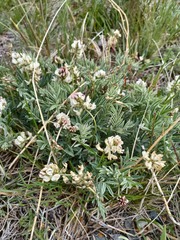
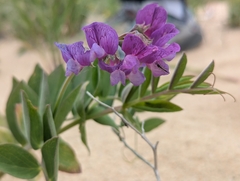
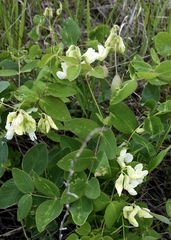
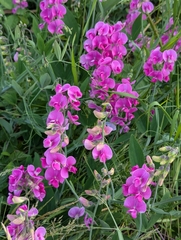
12 native plants whose flowers it visits, most recorded first.

Not native to the US

85 plants, most recorded first.
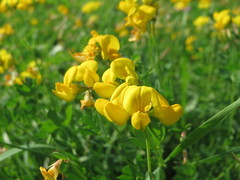
Nativity unknown

92 recorded only to genus or family, or with no nativity on record.

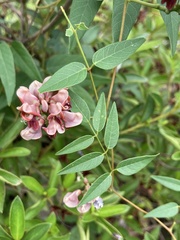
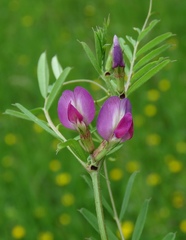
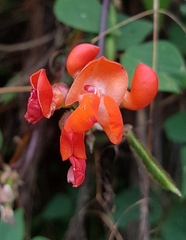
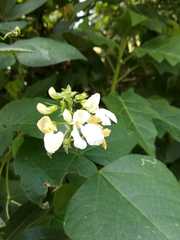
Runner Bean

for Banded Mud Bee

Open

Nectar plants · recorded

What the records say

  • Pollinates 2 records
    • trophiCH 2 records

      Reji Chacko, M., Albouy, C., Altermatt, F., Brändle, M., Casanelles Abella, J., Boussange, V., Campell, F., Ellis, W. N., Fopp, F., Gossner, M. M., Ho., H., Joss, A., Kipf, P., Neff, F., Petrović, A., Prié, V., Tomanović, Ž., Zimmerli, N., Pellissier, L. (2024). trophiCH v1 - a food web for Switzerland. EnviDat. https://www.doi.org/10.16904/envidat.467.

    References

    • Westrich, P. (2023). Oligolektische Arten nach Pflanzenfamilien geordnet [Wildbienen: Grandiose Vielfalt]. https://www.wildbienen.info/bluetenbesuch/oligolektische_arten_nach_pflanzenfamilien.php
    • Reji Chacko, M., Albouy, C., Altermatt, F., Brändle, M., Casanelles Abella, J., Boussange, V., Campell, F., Ellis, W. N., Fopp, F., Gossner, M. M., Ho., H., Joss, A., Kipf, P., Neff, F., Petrović, A., Prié, V., Tomanović, Ž., Zimmerli, N., Pellissier, L. (2024). trophiCH v1 - a food web for Switzerland. EnviDat. https://www.doi.org/10.16904/envidat.467. Accessed at <https://github.com/globalbioticinteractions/trophiCH/archive/9dcb8b2670c4675817c605f5add33cd183d3fb0e.zip> on 14 Jul 2026.
  • Visits 1 record
    • Rubinigg M. 2023 Data on economic dependence of pollination by animals in crops as well as observations of pollinators on plant species, inon economic dependence of pollination by animals in crops as well as observations of pollinators on plant species, in particular crops. EU Pollinator Hub. [2025-08-28] app.pollinatorhub.eu

    References

    • @article{quagliotti_research_1987, title = {Research on the pollination of {Runner} {Bean} ({Phaseolus} coccineus {L}.) for dry grain production}, volume = {1}, issn = {03946169, 15921573}, url = {http://www.jstor.org/stable/42882991}, abstract = {Between 1979 and 1984 the following aspects of the pollination of «Bianco di Spagna», the most widespread cultivar in Italy, of Phaseolus coccineus L. were studied: A) the composition and behaviour of spontaneous entomofauna related with pollination; B) the role of honeybees in the pollination of plants kept under cages; C) the frequency of natural cross pollination in crops grown in the open field. A) The research was carried out at Figino (province of Alessandria) in 1979 and 1980 and at Schierano (province of Asti) in 1980. The number of individuals of the various kinds of pollinators, that visited the flowers on sample areas of ordinary crops at different times of the day and in successive periods of the flowering season, were counted and their behaviour was observed. The results for the various sites of observation were quite homogeneous; most frequently observed was Apis millifera(50-64\% of the presences recorded), which gathered only nectar, Bombus pascuorum, B. terrestris and B. lapidarius, which gathered especially in the morning hours and also collected pollen. B. terrestris also visited the flowers without entering them, by simply biting a hole at the base of the corolla. B) The effect of the bees on seed yield from plants grown under net cages was checked in Figino, in 1979, and in Schierano, in 1980 and 1981. In any case the seed production in the plants to which bees had no access to was very low. Comparison between the plants caged with bees and those grown in the open field gave results that differed over the years, presumably because natural pollinators, prevalently bees, intervened to differing extents. C) The frequency of cross pollination was observed in plants of «Bianco di Spagna» grown in alternate rows, 1-2-3-4 m apart with plants of «Valloriate», an ecotype with dark seed and reddish brown stem, at Schierano in the three-year period 1982-1984. The results show that cross pollination frequencies between the two genotypes varied from 2 to 10\%, the lower percentages being found where the distance between the rows was greater.}, number = {1}, urldate = {2023-07-18}, journal = {Advances in Horticultural Science}, author = {Quagliotti, L. and Marletto, F.}, year = {1987}, note = {Publisher: Dipartimento Di Scienze Delle Produzioni Vegetali, Del Suolo E Dell'Ambiente Agroforestale, University of Florence}, pages = {43--49}, }