species 60,983 observations
Hairy Vetch
Vicia villosa
Field notes
Vicia villosa, known as the hairy vetch, fodder vetch or winter vetch, is a plant native to some of Europe and western Asia. It is a legume, grown as a forage crop, fodder crop, cover crop, and green manure. Although non-native, it occurs in all US states and is considered invasive by some states, such as Alaska, Florida, Georgia, Kansas, Michigan, Minnesota, Nebraska, Oregon, and Washington state — as well as in Japan and some parts of Europe where it is not native. It is also found in most Canadian provinces.
Hairy vetch is very similar to tufted vetch (Vicia cracca), the most noticeable difference being that tufted vetch has a smooth stem.
Several subspecies are recognized:
Vicia villosa ssp. ambigua (Guss.) Kerguelen (= ssp. elegantissima, ssp. pseudocracca)
Vicia villosa ssp. eriocarpa (Hausskn.) P.W.Ball
Vicia villosa ssp. microphylla (d'Urv.) P.W.Ball
Vicia villosa ssp. varia (Host) Corb. (= ssp. dasycarpa)
Vicia villosa ssp. villosa
The species Vicia hirsuta is also called hairy vetch.
Read more on WikipediaSupports All
supported in the US
-
Caterpillars
Moths and butterflies raised on it

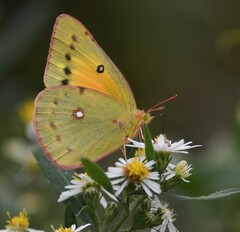

 Silvery Blue, Orange Sulphur, Corn Earworm Moth, Chionodes lugubrella
5
-
Hosted animals
Gall makers, leaf miners and other animals living on or in it
 Vetch Bruchid
1
-
Plant eaters
Animals that feed on it
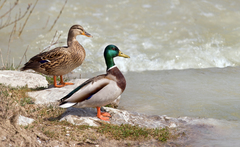


 Mallard, Common Raven, Eurasian Jackdaw, Convergent Lady Beetle
25
-
Flower visitors
Pollinators and other flower visitors


 Yellow-faced Bumble Bee, Black-tailed Bumble Bee, Golden Northern Bumble Bee, California Bumble Bee
120
Children
Range
Greener is more native, amber more introduced; paler is less certain. How this was decided
Key traits
- Layer
- Herbaceous plants
- Light
- Full sun Part shade
- Moisture
- Dry Well drained Moist
- Soil pH
- Neutral
From NC State Extension and USDA PLANTS.