family
Birches and Allies
Betulaceae
Field notes
Betulaceae, the birch family, includes six genera of deciduous nut-bearing trees and shrubs, including the birches, alders, hazels, hornbeams, hazel-hornbeam, and hop-hornbeams, numbering a total of 167 species. They are mostly natives of the temperate Northern Hemisphere, with a few species reaching the Southern Hemisphere in the Andes in South America. Their typical flowers are catkins and often appear before leaves.
In the past, the family was often divided into two families, Betulaceae (Alnus, Betula) and Corylaceae (the rest). Recent treatments, including the Angiosperm Phylogeny Group, have described these two groups as subfamilies within an expanded Betulaceae: Betuloideae and Coryloideae.
Betulaceae flowers are monoecious, meaning that they have both male and female flowers on the same tree. Their flowers present as catkins and are small and inconspicuous, often with reduced perianth parts. These flowers have large feathery stamen and produce a high volume of pollen, as they rely on wind pollination. Their leaves are simple, with alternate arrangement and doubly serrate margins.
Read more on WikipediaChildren
Range
Greener is more native, amber more introduced; paler is less certain. How this was decided
Top native birches and allies All
Native to the US, ranked by caterpillars, then bees and other hosts, food, flowers and shelter.
-
 Paper Birch
Betula papyrifera
keystone
caterpillars
395
hosts
18
food
68
flowers
7
shelter
2
-
 Yellow Birch
Betula alleghaniensis
keystone
caterpillars
312
hosts
17
food
61
flowers
6
shelter
1
-
 Gray Birch
Betula populifolia
keystone
caterpillars
290
hosts
15
food
48
flowers
6
-
 Swamp Birch
Betula pumila
keystone
caterpillars
289
hosts
15
food
48
flowers
4
-
 River Birch
Betula nigra
keystone
caterpillars
287
hosts
15
food
47
flowers
31
shelter
1
-
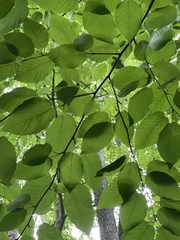 Sweet Birch
Betula lenta
keystone
caterpillars
282
hosts
21
food
49
flowers
10
shelter
1
-
 Grey Alder
Alnus incana
caterpillars
272
hosts
15
food
62
flowers
4
-
 Dwarf Resin Birch
Betula glandulosa
keystone
caterpillars
263
hosts
13
food
39
flowers
3
-
 Heartleaf Paper Birch
Betula cordifolia
caterpillars
263
hosts
13
food
36
flowers
4
-
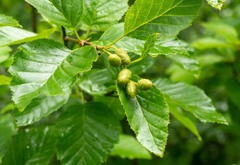 Green Alder
Alnus alnobetula
caterpillars
228
hosts
5
food
41
flowers
6
-
 Smooth Alder
Alnus serrulata
caterpillars
183
hosts
4
food
29
flowers
8
-
 Red Alder
Alnus rubra
caterpillars
179
hosts
7
food
22
flowers
8
-
 Water Birch
Betula occidentalis
keystone
caterpillars
171
hosts
10
food
26
flowers
2
-
 Beaked Hazelnut
Corylus cornuta
caterpillars
128
hosts
4
food
19
flowers
1
-
 White Alder
Alnus rhombifolia
caterpillars
124
hosts
7
food
16
flowers
5
shelter
1