genus
Lupines
Lupinus
Field notes
Lupinus, commonly known as lupin, lupine, or regionally bluebonnet, is a genus of plants in the legume family Fabaceae. The genus includes over 199 species, with centres of diversity in North and South America. Smaller centres occur in North Africa and the Mediterranean. They are widely cultivated both as a food source and as ornamental plants, but are invasive to some areas. For instance, lupine has become an ecological problem in Iceland since the beginning of the 21st century.
The part of the plant which is eaten is the leguminous seed. It is nutritious, sustainable, and affordable. Because they are bitter and contain strong alkaloids, they must be pickled prior to consumption, to avoid toxicity. They can also be made into a flour and used as fertilizer. They were historically eaten in the Mediterranean, North Africa, and Latin America, but have now gained popularity in other parts of the world, such as Denmark and Belarus. In spite of lupins not being native to Australia, in the past decade it has produced 85 percent of commercially grown lupins.
There are ancient texts which refer to the utilization of lupine seeds, such as the Mishnah, and the Roman writer Pliny the Elder. Evidence of their consumption have been found in Egyptian Pharonic tombs and in the Western Galilee, Israel, with the latter dating back to hunter and gatherer Natufian cave residents.
The species are mostly herbaceous perennial plants 0.3–1.5 metres (1–5 feet) tall, but some are annual plants and a few are shrubs up to 3 m (10 ft) tall. An exception is the chamis de monte (Lupinus jaimehintonianus) of Oaxaca in Mexico, which is a tree up to 8 m (26 ft) tall.
Lupins have soft green to grey-green leaves which may be coated in silvery hairs, often densely so. The leaf blades are usually palmately divided into five to 28 leaflets, or reduced to a single leaflet in a few species of the southeastern United States and eastern South America.
The flowers are produced in dense or open whorls on an erect spike, each flower 1–2 centimetres (3⁄8–3⁄4 inch) long. The pea-like flowers have an upper standard, or banner, two lateral wings, and two lower petals fused into a keel. The flower shape has inspired common names such as bluebonnets and quaker bonnets.
The fruit is a pod containing several seeds. The seeds contain alkaloids which lend them a bitter taste.
Extrafloral nectaries have been found on a species in Arizona.
Read more on WikipediaChildren 24 of 144
- Bush Lupine Complex 6 native
- Unifoliolate Floridian Lupine Clade 4 native
- Large-leaved Lupine native
- Texas Bluebonnet native
- Miniature Lupine native
- Arroyo Lupine native
- Sundial Lupine native
- Broadleaf Lupine native
- Sky Lupine native
- Chick Lupine native
- Dwarf Lupine native
- Coulter's Lupine native
- Arizona Lupine native
- Silky Lupine native
- Stinging Lupine native
- Narrow-leaved Lupine introduced
- Nootka Lupine native
- Arctic Lupine native
- Bajada Lupine native
- Collared Annual Lupine native
- Varied Lupine native
- Seashore Lupine native
- Longspur Lupine native
- Riverbank Lupine native
Range
Greener is more native, amber more introduced; paler is less certain. How this was decided
Key traits
- Layer
- Shrubs
- Plant type
- Annual Perennial Shrub Wildflower
From USDA PLANTS.
Top native lupines All
Native to the US, ranked by caterpillars, then bees and other hosts, food, flowers and shelter.
-
 Silvery Lupine
Lupinus argenteus
keystone
caterpillars
44
bees
3
hosts
3
food
7
flowers
135
-
 Rusty Lupine
Lupinus pusillus
keystone
caterpillars
44
bees
3
hosts
3
food
6
flowers
82
-
 Large-leaved Lupine
Lupinus polyphyllus
keystone
caterpillars
43
bees
4
hosts
4
food
13
flowers
104
-
 Kellogg's Spurred Lupine
Lupinus caudatus
keystone
caterpillars
43
bees
3
hosts
3
food
6
flowers
77
-
 Silky Lupine
Lupinus sericeus
keystone
caterpillars
41
bees
3
hosts
3
food
8
flowers
98
-
 Dwarf Lupine
Lupinus lepidus
keystone
caterpillars
40
bees
4
hosts
4
food
6
flowers
72
-
 Burke's Lupine
Lupinus burkei
keystone
caterpillars
40
bees
3
hosts
3
food
5
flowers
70
-
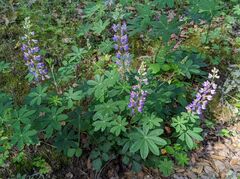 Broadleaf Lupine
Lupinus latifolius
keystone
caterpillars
39
bees
4
hosts
4
food
8
flowers
76
-
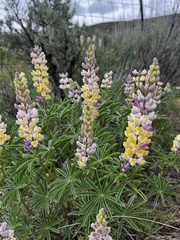 Longspur Lupine
Lupinus arbustus
keystone
caterpillars
39
bees
3
hosts
3
food
6
flowers
73
-
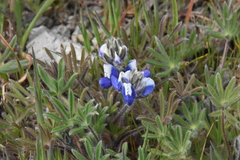 Miniature Lupine
Lupinus bicolor
keystone
caterpillars
38
bees
4
hosts
4
food
6
flowers
75
-
 Riverbank Lupine
Lupinus rivularis
keystone
caterpillars
38
bees
3
hosts
4
food
4
flowers
69
-
 Brewer's Lupine
Lupinus breweri
keystone
caterpillars
38
bees
3
hosts
3
food
5
flowers
63
-
 Shortstem Lupine
Lupinus brevicaulis
keystone
caterpillars
38
bees
2
hosts
3
food
5
flowers
65
-
 Chick Lupine
Lupinus microcarpus
caterpillars
37
bees
3
hosts
4
food
10
flowers
64
-
 Sicklekeel Lupine
Lupinus albicaulis
keystone
caterpillars
37
bees
3
hosts
4
food
5
flowers
67