family
Legumes
Fabaceae
Field notes
Fabaceae or Leguminosae, commonly known as the legume, pea, or bean family, is a large and agriculturally important family of flowering plants. It includes trees, shrubs, and perennial or annual herbaceous plants, which are easily recognized by their fruit (legume) and their compound, stipulate leaves. The family is widely distributed, and is the third-largest land plant family in number of species, behind only the Orchidaceae and Asteraceae, with about 765 genera and nearly 20,000 known species.
The five largest genera of the family are Astragalus (over 3,000 species), Acacia (over 1,000 species), Indigofera (around 700 species), Crotalaria (around 700 species), and Mimosa (around 400 species), which constitute about a quarter of all legume species. The c. 19,000 known legume species amount to about 7% of flowering plant species. Fabaceae is the most common family found in tropical rainforests and dry forests of the Americas and Africa.
Recent molecular and morphological evidence supports the conclusion that the Fabaceae is a single monophyletic family. This conclusion has been supported not only by the degree of interrelation shown by different groups within the family compared with that found among the Leguminosae and their closest relations, but also by all the recent phylogenetic studies based on DNA sequences. These studies confirm that the Fabaceae are a monophyletic group that is closely related to the families Polygalaceae, Surianaceae and Quillajaceae and that they belong to the order Fabales.
Along with the cereals, some fruits and tropical roots, a number of Leguminosae have been staple human foods for millennia, and their use is closely related to human evolution.
The family Fabaceae includes a number of plants that are common in agriculture, including Glycine max (soybean), Phaseolus (beans), Pisum sativum (pea), Cicer arietinum (chickpeas), Vicia faba (broad bean), Vigna unguiculata (cowpea), Medicago sativa (alfalfa), Arachis hypogaea (peanut), Ceratonia siliqua (carob), Tamarindus indica (tamarind), Trigonella foenum-graecum (fenugreek), and Glycyrrhiza glabra (liquorice). A number of species are also weedy pests in different parts of the world, including Cytisus scoparius (broom), Robinia pseudoacacia (black locust), Ulex europaeus (gorse), Pueraria montana (kudzu), and a number of Lupinus species.
Read more on WikipediaChildren
Range
Greener is more native, amber more introduced; paler is less certain. How this was decided
Top native legumes All
Native to the US, ranked by caterpillars, then bees and other hosts, food, flowers and shelter.
-
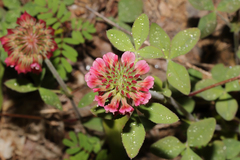 Buffalo Clover
Trifolium reflexum
caterpillars
80
hosts
2
food
19
flowers
84
shelter
2
-
 Running Buffalo Clover
Trifolium stoloniferum
keystone
caterpillars
75
hosts
2
food
15
flowers
74
shelter
2
-
 Hollyleaf Clover
Trifolium gymnocarpon
keystone
caterpillars
74
hosts
1
food
18
flowers
81
-
 Black Locust
Robinia pseudoacacia
caterpillars
72
hosts
11
food
34
flowers
68
-
 Springbank Clover
Trifolium wormskioldii
keystone
caterpillars
71
bees
2
hosts
2
food
19
flowers
78
shelter
1
-
 Long-stalked Clover
Trifolium longipes
keystone
caterpillars
71
bees
2
hosts
2
food
17
flowers
78
shelter
1
-
 Kates Mountain Clover
Trifolium virginicum
keystone
caterpillars
71
hosts
2
food
15
flowers
69
shelter
2
-
 Whiproot Clover
Trifolium dasyphyllum
keystone
caterpillars
69
hosts
1
food
16
flowers
75
-
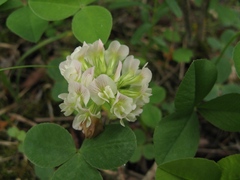 Running Glade Clover
Trifolium calcaricum
keystone
caterpillars
66
hosts
1
food
13
flowers
53
shelter
2
-
 White-tipped Clover
Trifolium variegatum
keystone
caterpillars
61
bees
2
hosts
2
food
19
flowers
102
shelter
1
-
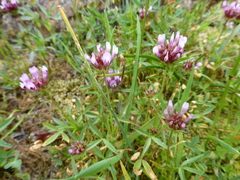 Tomcat Clover
Trifolium willdenovii
keystone
caterpillars
61
bees
2
hosts
2
food
19
flowers
67
shelter
1
-
 Small-headed Clover
Trifolium microcephalum
keystone
caterpillars
59
bees
2
hosts
2
food
19
flowers
66
shelter
1
-
 Parry Clover
Trifolium parryi
keystone
caterpillars
58
hosts
1
food
15
flowers
67
-
 Pinpoint Clover
Trifolium gracilentum
keystone
caterpillars
57
bees
2
hosts
2
food
17
flowers
60
shelter
1
-
 Dwarf Clover
Trifolium nanum
keystone
caterpillars
57
hosts
1
food
14
flowers
66