species 11,101 observations
Broadleaf Lupine
Lupinus latifolius
Field notes
Lupinus latifolius is a species of lupine known by the common name broadleaf lupine. It is native to western North America from British Columbia to Baja California to New Mexico, where it is common and can be found in several types of habitat. There are several subtaxa, described as subspecies or varieties, some common and some rare. They vary in morphology. In general this plant is an erect perennial herb. It grows 30 centimeters to over two meters in height, in texture hairy to nearly hairless. Each palmate leaf is made up of several leaflets, those on larger plants up to 10 centimeters long. The inflorescence bears many flowers, sometimes in whorls. Each flower is one to two centimeters in length, purple to blue to white in color, the spot on its banner yellowish, pinkish, or white.
One rare subtaxon, Lupinus latifolius var. barbatus, is endemic to the Modoc Plateau of northeastern California and adjacent territory in Oregon and Nevada. The subtaxon dudleyi is known only from the San Francisco Bay Area.
It is a larval host to Boisduval's blue, clouded sulphur, orange sulphur, Persius duskywing, and silvery blue butterflies.
Read more on WikipediaSupports All
supported in the US
-
Caterpillars
Moths and butterflies raised on it


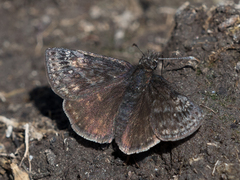
 Western Sulphur, Boisduval's Blue, Persius Duskywing, Anna's Blue
39
-
Specialist bees
Bees whose young are raised on the pollen of it

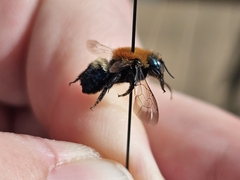
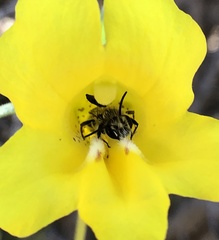
 Black-and-gray Leafcutter Bee, Osmia integra, Ancylandrena atoposoma, Osmia longula
4
-
Hosted animals
Gall makers, leaf miners and other animals living on or in it
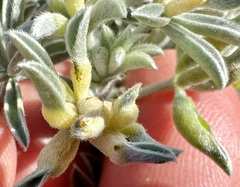


 Lupine Leaf Gall Midge, Lupine Stem Gall Midge, Lupine Bud Gall Midge, Judolia instabilis
4
-
Plant eaters
Animals that feed on it


 Lupine Aphid, California Quail, Margined Calligrapher, Brown Bear
8
-
Flower visitors
Pollinators and other flower visitors


 Colorado Black-notched Bumble Bee, Yellow-faced Bumble Bee, Fuzzy-Horned Bumble Bee, Black-tailed Bumble Bee
76
Children
Range
Greener is more native, amber more introduced; paler is less certain. How this was decided
Key traits
- Layer
- Herbaceous plants
- Plant type
- Perennial Wildflower
From USDA PLANTS.