species 1,801 observations
Weeping Juniper
Juniperus flaccida
Field notes
Juniperus flaccida (known as drooping juniper, weeping juniper, Mexican juniper, or tláscal) is a large shrub or small tree reaching 5–10 metres (16–33 feet) (rarely to 15 m) tall. It is native to central and northern Mexico (from Oaxaca northward) and the extreme southwest of Texas, United States (Brewster County). It grows at moderate altitudes of 800–2,600 metres (2,600–8,500 feet), on dry soils.
The bark is brown, with stringy vertical fissuring. The shoots are strongly pendulous, 1–1.2 mm diameter, and often borne in flattened sprays (the only juniper commonly showing this character). The leaves are arranged in opposite decussate pairs; the adult leaves are scale-like, 2–4 mm long (to 7 mm on lead shoots) and 1–1.5 mm broad. The juvenile leaves (on young seedlings only) are needle-like, 5–10 mm long. The cones are berry-like, 8–20 mm in diameter, green maturing brown, and contain 6-12 seeds (the most seeds per cone of any juniper); they are mature in about 18 months. The male cones are 3–5 mm long, and shed their pollen in spring. It is largely dioecious, producing cones of only one sex on each tree.
There are three varieties, not accepted as distinct by all authorities:
Juniperus flaccida var. flaccida. Throughout the range of the species. Cones 9–15 mm diameter, with inconspicuous scale margins.
Juniperus flaccida var. martinezii. Restricted to a small area in Jalisco. Cones 6–8 mm diameter, with inconspicuous scale margins.
Juniperus flaccida var. poblana. Throughout the southern two thirds of the range of the species. Cones 12–20 mm diameter, with conspicuous scale margins.
Read more on WikipediaSupports All
supported in the US
-
Caterpillars
Moths and butterflies raised on it
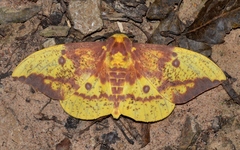


 Imperial Moth, Common Eupithecia Moth, Juniper Hairstreak, Spruce Budworm Moth
12
-
Hosted animals
Gall makers, leaf miners and other animals living on or in it
 Juniper Urn Gall Midge
1
-
Plant eaters
Animals that feed on it


 American Robin, Wild Turkey, Red-headed Ash Borer, Yellow-rumped Warbler
15
Range
Greener is more native, amber more introduced; paler is less certain. How this was decided
Key traits
- Layer
- Trees
- Light
- Part shade
- Moisture
- Dry
- Water use
- Medium
From USDA PLANTS and the Lady Bird Johnson Wildflower Center.