Plant eaters on Iron River Dewberry

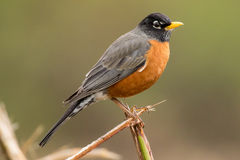
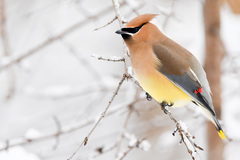
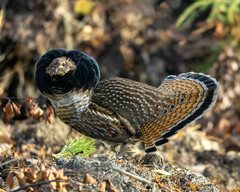
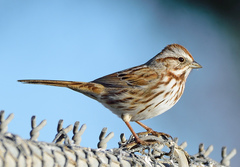
53 native animals that feed on it, most recorded first.

Nativity unknown

1 recorded only to genus or family, or with no nativity on record.

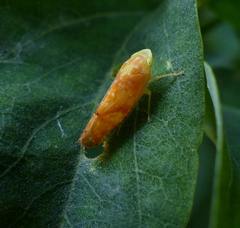
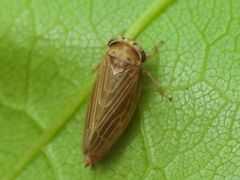
Green Cone-headed Planthopper

on Iron River Dewberry

Open

Plant eaters · handed down from brambles

What the records say

  • Eaten by 2 records on brambles

    Recorded on brambles, and handed down to its species.

    • TaxonWorks 1 record

      Poelen, J. H. (2024). A biodiversity dataset graph: Biological Associations in TaxonWorks hash://sha256/e4a47c067d6c125da60c9a1b92b5eecdea539cb8666cd3aed99db347ae5b8ed0 hash://md5/686007de79cc2a49ab23fd3debe56e3f [Data set]. Zenodo. https://doi.org/10.5281/zenodo.11151783

    • Dmitriev (2026). 3i World Auchenorrhyncha Database.

    References

    • Cojocariu, A. &amp; Crîsmaru, A.E. (2023) New data and recent updates on invasive horticultural pest species <i>Acanalonia conica</i> (Hemiptera: Auchenorrhyncha) in Romania. <i>Horticulturae</i>, 9(8), 1–15. https://doi.org/10.3390/horticulturae9080949
    • @article{199751, author = {Cojocariu, Ana and Crîsmaru, Alina Elena}, journal = {Horticulturae}, month = {aug}, day = {21}, number = {8}, pages = {1-15}, publisher = {MDPI AG}, title = {New data and recent updates on invasive horticultural pest species <i>Acanalonia conica</i> (Hemiptera: Auchenorrhyncha) in Romania}, volume = {9}, year = {2023}, url = {https://doi.org/10.3390%2Fhorticulturae9080949}, abstract = {As a result of increased trade, transportation, and globalization, the phenomenon of growth regarding the entrance of invasive alien species (IAS) represents a serious concern (including flora, fauna, and microbiota). Acanalonia conica (Say, 1830), also known as the green cone-headed planthopper (GCHP), was first identified in the Chrysanthemum collection of the Botanical Garden in Iaşi, Romania. The principal objectives of this article are to update the limited data on the presence of A. conica in Romania, revealing its occurrence in new areas (East Romania, Iași) and on other host plants that were not previously documented in the United States and Europe, as well as to establish the trends of population evolution, with an emphasis on the peak of GCHP population development during the life cycle on East Romania indoor conditions. The evolution of the GCHP population was established using the recorded data on total counts of adults and nymphs observed from a limited area (greenhouse compartment), checked every two days in 115 days of direct observations. The peak of population was established at late-July (25th to 31st day of the month, 30th week of the year) for the conditions of East Romania and it was the appropriate time to monitor the activity of the species, to estimate the damages in specific crops, and to initiate the specific pest control measures. Current findings are significant not only for the general spread of this species in Europe and in Romania but also for the observations regarding new hosts and the population evolution in a greenhouse habitat for the cultivation of ornamental plants.}, doi = {10.3390/horticulturae9080949} }