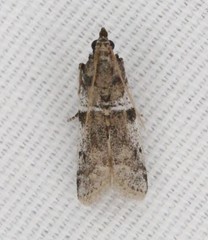
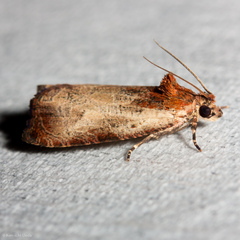
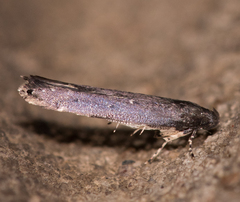
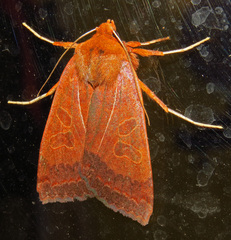
Recorded on oaks, and handed down to its species.
-
Sarah E Miller. 12/13/2016. Species associations manually extracted from Onstad, D.W. EDWIP: Ecological Database of the World's Insect Pathogens. Champaign, Illinois: Illinois Natural History Survey, [23/11/2016]. http://insectweb.inhs.uiuc.edu/Pathogens/EDWIP.
-
Hale, Kayla R. S. and Curlis, John David and Auteri, Giorgia G. and Bishop, Sasha and French, Rowan L. K. and Jones, Lance E. and Mills, Kirby L. and Scholtens, Brian G. and Simons, Meagan and Thompson, Cody and Tourville, Jordon and Valdovinos, Fernanda S. (2024). A highly resolved network reveals the role of terrestrial herbivory in structuring aboveground food webs.
-
Ed Baker; Ian J. Kitching; George W. Beccaloni; Amoret Whitaker et al. (2016). Dataset: NHM Interactions Bank. Natural History Museum Data Portal (data.nhm.ac.uk). https://doi.org/10.5519/0060767
References
-
Wilson, G.G., 1984. Pathogenicity of Nosema disstriae, Pleistophora schubergi and Vairimorpha necatrix (Microsporidia) to larvae of the forest tent caterpillar, Malacosoma disstria. Z. Parasitenkd. 70: 763-
-
Welton, M., and Tyrell, D. 1990. Culture catalogue for entomopathogenic fungi collection. Forest Pest Management Institute, Forestry Canada, 1219 Queen St. East, Sault Ste. Marie, Ontario, Canada P6A 5M7.; Hajek, A. E.; Butler, L.; Walsh, S. R. A.; Silver, J. C.; Hain, F. P.; Hastings, F. L.; Odell, T. M.; Smitley, D. R. 1996. Host range of the gypsy moth (Lepidoptera: Lymantriidae) pathogen Entomophaga maimaiga (Zygomycetes: Entomophthorales) in the field versus laboratory. Environmental Entomology 25(4): 709-721.; Humber, R.A. 1999? Collection of entomopathogenic fungal cultures (unpublished) U.S. Department of Agriculture, Agriculture Research Service, Plant Protection Research Unit, U.S. Plant, Soil, and Water Laboratory, Tower Rd., Ithaca, N. Y. 14853-0331.
-
Tanada, Y., and Kaya, H. K. 1993. Insect Pathology. Academic Press, San Diego. 666 pp.
-
Sprague, V. 1977. Annotated List of Species of Microsporidia. pp. 31-334. In Bulla, L.A. and Cheng, T.C. [eds.], Comparative Pathobiology V. 2; Systematics of the Microsporidia. Plenum Press, New York; Zwolfer, W. 1927. Die Pebrine des Schwammspinner und Goldafters, eine neue wirtschaftlich bedeutungsvolle Infektionskrankheit. Z. Angew. Entomol. 12:498-500.
-
Sprague, V. 1977. Annotated List of Species of Microsporidia. pp. 31-334. In Bulla, L.A. and Cheng, T.C. [eds.], Comparative Pathobiology V. 2; Systematics of the Microsporidia. Plenum Press, New York; Smirnoff, W.A., 1975. Histological studies on the development of the microsporidian Thelohania pristiphorae in larvae of Malacosoma disstria and Malacosoma americanum. J. Invertebr. Pathol. 26: 410-403.
and 17 more