genus
Oaks
Quercus
Field notes
An oak is a hardwood tree or shrub in the genus Quercus of the beech family. They have spirally arranged leaves, often with lobed edges, and a nut called an acorn, borne within a cup. The genus is widely distributed in the Northern Hemisphere, with some 475 species, both deciduous and evergreen. Fossil oaks date back to the Middle Eocene. Molecular phylogeny shows that the genus is divided into Old World and New World clades, but many oak species hybridise freely, making the genus's history difficult to resolve.
Ecologically, oaks are keystone species in habitats from Mediterranean semi-desert to subtropical rainforest. They live in association with many kinds of fungi, including truffles. Oaks support more than 950 species of caterpillar, many kinds of gall wasp which form distinctive galls (roundish woody lumps such as the oak apple), and a large number of pests and diseases. Oak leaves and acorns contain enough tannin to be toxic to cattle, but pigs are able to digest them safely. Oak timber is strong and hard, and has found many uses in construction and furniture-making. The bark was traditionally used for tanning leather. Wine barrels are made of oak; these are used for aging alcoholic beverages such as sherry and whisky, giving them a range of flavours, colours, and aromas. The spongy bark of the cork oak is used to make traditional wine bottle corks. Almost a third of oak species are threatened with extinction due to climate change, invasive pests, and habitat loss.
In culture, the oak tree is a symbol of strength and serves as the national tree of many countries. In Indo-European and related religions, the oak is associated with thunder gods. Individual oak trees of cultural significance include the Royal Oak in Britain, the Charter Oak in the United States, and the Guernica Oak in the Basque Country.
Read more on WikipediaChildren
Range
Greener is more native, amber more introduced; paler is less certain. How this was decided
Key traits
- Layer
- Trees
From USDA PLANTS.
Top native oaks All
Native to the US, ranked by caterpillars, then bees and other hosts, food, flowers and shelter.
-
 Northern Red Oak
Quercus rubra
keystone
caterpillars
398
hosts
95
food
185
flowers
39
shelter
4
-
 Bur Oak
Quercus macrocarpa
keystone
caterpillars
384
hosts
98
food
135
flowers
47
shelter
5
-
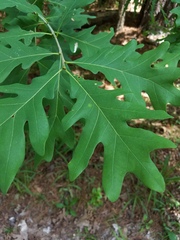 White Oak
Quercus alba
keystone
caterpillars
383
hosts
104
food
163
flowers
49
shelter
6
-
 Chinkapin Oak
Quercus muehlenbergii
keystone
caterpillars
378
hosts
92
food
115
flowers
51
shelter
2
-
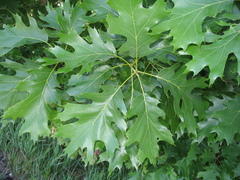 Black Oak
Quercus velutina
keystone
caterpillars
367
hosts
98
food
113
flowers
32
shelter
2
-
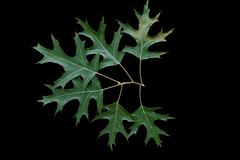 Scarlet Oak
Quercus coccinea
keystone
caterpillars
361
hosts
88
food
115
flowers
26
shelter
2
-
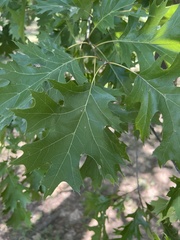 Shumard Oak
Quercus shumardii
keystone
caterpillars
360
hosts
95
food
111
flowers
33
shelter
2
-
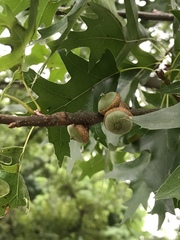 Pin Oak
Quercus palustris
keystone
caterpillars
359
hosts
90
food
161
flowers
32
shelter
2
-
 Post Oak
Quercus stellata
keystone
caterpillars
349
hosts
92
food
131
flowers
28
shelter
4
-
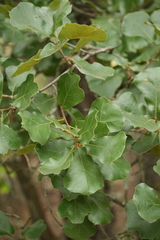 Blackjack Oak
Quercus marilandica
keystone
caterpillars
346
hosts
95
food
122
flowers
29
shelter
2
-
 Swamp Chestnut Oak
Quercus michauxii
keystone
caterpillars
344
hosts
88
food
112
flowers
24
shelter
5
-
 Water Oak
Quercus nigra
keystone
caterpillars
342
hosts
97
food
121
flowers
29
shelter
2
-
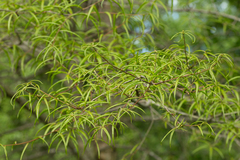 Willow Oak
Quercus phellos
keystone
caterpillars
341
hosts
99
food
123
flowers
38
shelter
2
-
 Swamp White Oak
Quercus bicolor
keystone
caterpillars
341
hosts
81
food
114
flowers
40
shelter
2
-
 Dwarf Chinkapin Oak
Quercus prinoides
keystone
caterpillars
339
hosts
81
food
106
flowers
27
shelter
2