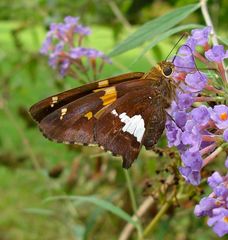
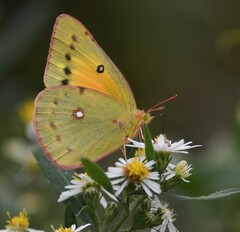
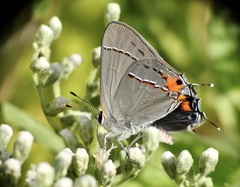
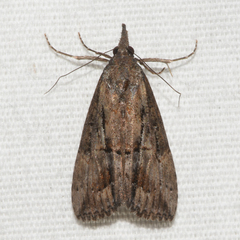
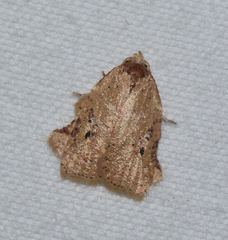
Recorded on beans, and handed down to its species.
-
Sarah E Miller. 12/13/2016. Species associations manually extracted from Onstad, D.W. EDWIP: Ecological Database of the World's Insect Pathogens. Champaign, Illinois: Illinois Natural History Survey, [23/11/2016]. http://insectweb.inhs.uiuc.edu/Pathogens/EDWIP.
References
-
Sprague, V. 1977. Annotated List of Species of Microsporidia. pp. 31-334. In Bulla, L.A. and Cheng, T.C. [eds.], Comparative Pathobiology V. 2; Systematics of the Microsporidia. Plenum Press, New York; Nordin, G.L. and Maddox, J.V., 1974. Microsporidia of the fall webworm, Hyphantria cunea I. Identification, distribution, and comparison of Nosema sp. with similar Nosema spp. from other Lepidoptera. J. Invertebr. Pathol. 24: 1-13.
-
Martignoni, M.E., and Iwai, P.J., 1986. A Catalogue of Viral Diseases of insects, Mites, and Ticks. USDA Forest Service, Pacific Northwest Research Station, Portland, OR, General Technical Report PNW-195, 4th edition,51 pp.
-
Maddox, J.V., and Sprenkel, R.K., 1978. Some enigmatic microsporidia of the genus Nosema. Misc. Publ. Entomol. Soc. Am. 11: 65-84; Brooks, W. M. 1988. Entomogenous protozoa, pp. 1-121 in C. M. Ignoffo (ed.) CRC Handbook of Natural Pesticides Vol. 5 Microbial Insecticides, Part A, Entomogenous Protozoa and Fungi. CRC Press, Boca Raton, FL.
-
Hostetter, D.L., and Puttler, B., 1991. A new broad host spectrum nuclear polyhedrosis virus isolated from a celery looper, Anagrapha falcifera (Kirby), (Lepidoptera: Noctuidae). Environ. Entomol. 20: 1480-1488.
-
Hajek, A. E.; Butler, L.; Walsh, S. R. A.; Silver, J. C.; Hain, F. P.; Hastings, F. L.; Odell, T. M.; Smitley, D. R. 1996. Host range of the gypsy moth (Lepidoptera: Lymantriidae) pathogen Entomophaga maimaiga (Zygomycetes: Entomophthorales) in the field versus laboratory. Environmental Entomology 25(4): 709-721.
and 3 more