species 1,513 observations
Coast Oak
Quercus parvula
Field notes
Quercus parvula, the Santa Cruz Island oak, is an evergreen red oak found on north-facing Santa Cruz Island slopes and in the California Coast Ranges from Santa Barbara County north to Mendocino County. It was taxonomically combined with Quercus wislizeni until resurrected as a separate species by Kevin Nixon in 1980. The type locality of Q. parvula var. shrevei (originally described by C.H. Muller as Q. shrevei) is Palo Colorado Canyon in Monterey County. It is placed in Quercus section Lobatae.
Three varieties of Q. parvula are currently recognized:
Q. parvula differs morphologically from its close relative Q. wislizeni in the following ways:
Leaf blades are larger, > (2)4 cm long rather than < 4(6) cm
Leaf blades are thinner, generally < 0.26 mm near the apex rather than usually > 0.26 mm
Current year twigs are 5-sided rather than ± roundish in cross section
Leaf petioles and current year twigs are glabrous to sparsely hairy rather than moderately to very hairy
Nut tips are blunt rather than more sharply pointed
Abaxial golden glandular uniseriate leaf blade trichomes are missing or sparse rather than moderate to dense
Abaxial multiradiate leaf blade trichomes are missing or sparse on the midvein rather than occasional to common
Secondary leaf blade veins are raised abaxially rather than ± not raised
Q. parvula and Q. wislizeni never produce newly emerging leaves with a velvety coating of red bulbous trichomes on the abaxial (upper) surface. This separates them from Q. kelloggii and both varieties of Q. agrifolia which produce such leaves.
Read more on WikipediaSupports All
supported in the US
-
Caterpillars
Moths and butterflies raised on it


 Vespina quercivora, Forest Tent Caterpillar Moth, Carpenterworm Moth, Polyphemus Moth
72
-
Hosted animals
Gall makers, leaf miners and other animals living on or in it


 Live Oak Petiole Gall Wasp, Two-horned Gall Wasp, Live Oak Apple Gall Wasp, Gouty Stem Gall Wasp
40
-
Plant eaters
Animals that feed on it

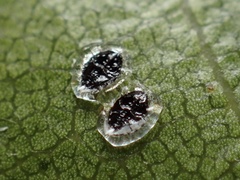

 Aceria paramackiei, Aleuroplatus gelatinosus, California Scrub-Jay, Ruffed Grouse
31
-
Flower visitors
Pollinators and other flower visitors

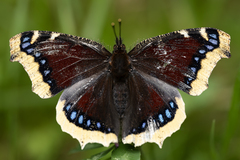

 California Sister, Mourning Cloak, Pileated Woodpecker, Western Yellowjacket
7
Children
Range
Greener is more native, amber more introduced; paler is less certain. How this was decided
Key traits
- Layer
- Trees
From USDA PLANTS.