Plant eaters on Virginia Strawberry

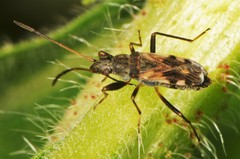
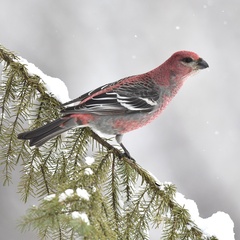
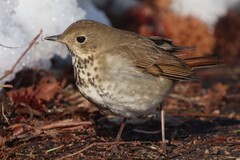
35 native animals that feed on it, most recorded first.

Not native to the US

1 animal, most recorded first.

Nativity unknown

9 recorded only to genus or family, or with no nativity on record.

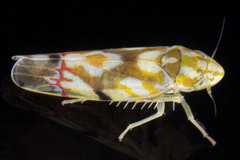
Vine Leafhopper

on Virginia Strawberry

Open

Plant eaters · handed down from strawberries

What the records say

  • Eaten by 2 records on strawberries

    Recorded on strawberries, and handed down to its species.

    • TaxonWorks 1 record

      Poelen, J. H. (2024). A biodiversity dataset graph: Biological Associations in TaxonWorks hash://sha256/e4a47c067d6c125da60c9a1b92b5eecdea539cb8666cd3aed99db347ae5b8ed0 hash://md5/686007de79cc2a49ab23fd3debe56e3f [Data set]. Zenodo. https://doi.org/10.5281/zenodo.11151783

    • Dmitriev (2026). 3i World Auchenorrhyncha Database.

    References

    • Santos, A.A., Jacques, J., Plante, N., Fournier, V. &amp; Pérez-López, E. (2023) Leafhoppers as vectors of phytoplasma diseases in Canadian berry crops: a review in the face of climate change. <i>Annals of the Entomological Society of America</i>, 117(1), 14–20. https://doi.org/10.1093/aesa/saad038
    • @article{212414, author = {Santos, Abraão Almeida and Jacques, Jordanne and Plante, Nicolas and Fournier, Valérie and Pérez-López, Edel}, editor = {Krell, Rayda}, journal = {Annals of the Entomological Society of America}, month = {nov}, day = {30}, number = {1}, pages = {14-20}, publisher = {Oxford University Press (OUP)}, title = {Leafhoppers as vectors of phytoplasma diseases in Canadian berry crops: a review in the face of climate change}, volume = {117}, year = {2023}, url = {http://dx.doi.org/10.1093/aesa/saad038}, abstract = {<b>Abstract</b> Climate change has facilitated the introduction, establishment, and movement of invasive species in northern regions, enabling the colonization of previously unsuitable areas. While the responses of insects to these changes have been increasingly studied, our understanding of how such alterations impact trophic interactions still requires further research to make reliable predictions about the spread of diseases in a warming world. Phytoplasmas, a group of obligate parasitic unculturable Mollicutes, primarily rely on leafhoppers (Hemiptera: Cicadellidae) for transmission, spread, and survival. Phytoplasmas are associated with over 600 diseases affecting more than 1,000 plant species, including berries, grapevines, and other small fruits. In North America, diseases such as grapevine yellows, blueberry stunt, and strawberry green petal diseases have been linked to phytoplasma strains transmitted by known leafhopper species. However, the number of phytoplasma diseases has significantly increased in North America over the past decade, suggesting the presence of unidentified vectors or an abundance of leafhopper vectors. This short review provides an overview of the current knowledge on leafhoppers as vectors of phytoplasmas to berries, focusing on the last decade’s research in Canada. This paper also explores the potential implications of climate change on this pathosystem, including the anticipated range expansion of leafhopper species, changes in phytoplasma acquisition and transmission, and the risk of new leafhopper-transmitted plant-pathogen introductions through the arrival of new leafhopper species.}, issn = {0013-8746}, doi = {10.1093/aesa/saad038} }