Plant eaters on Black-bindweed

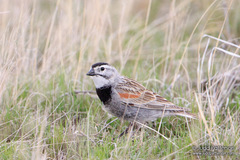
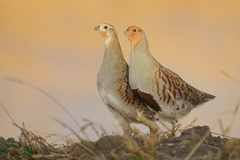
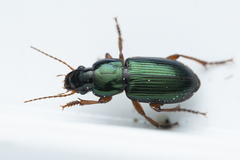
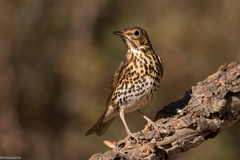
13 native animals that feed on it, most recorded first.

Not native to the US

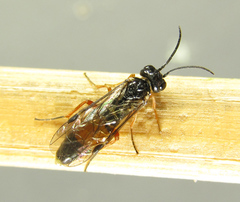
21 animals, most recorded first.

Nativity unknown

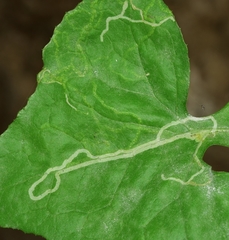
29 recorded only to genus or family, or with no nativity on record.

Meadow Spittlebug

on Black-bindweed

Open

Plant eaters · recorded

What the records say

  • Eaten by 1 record
    • TaxonWorks 1 record

      Poelen, J. H. (2024). A biodiversity dataset graph: Biological Associations in TaxonWorks hash://sha256/e4a47c067d6c125da60c9a1b92b5eecdea539cb8666cd3aed99db347ae5b8ed0 hash://md5/686007de79cc2a49ab23fd3debe56e3f [Data set]. Zenodo. https://doi.org/10.5281/zenodo.11151783

    References

    • @article{200515, author = {Thompson, Vinton and Harkin, Claire and Stewart, Alan J.A.}, editor = {Bossart, Janice L.}, journal = {PLOS One}, month = {oct}, day = {4}, number = {10}, pages = {e0291734}, publisher = {Public Library of Science (PLoS)}, title = {The most polyphagous insect herbivore? Host plant associations of the Meadow spittlebug, <i>Philaenus spumarius</i> (L.)}, volume = {18}, year = {2023}, url = {https://doi.org/10.1371%2Fjournal.pone.0291734}, abstract = {A comprehensive list of all known host plant species utilised by the Meadow Spittlebug (<i>Philaenus spumarius</i> (L.)) is presented, compiled from published and unpublished sources. <i>P</i>. <i>spumarius</i> feeds on 1311 host plants in 631 genera and 117 families. This appears, by a large margin, to be the greatest number of host species exploited by any herbivorous insect. The Asteraceae (222 species) and Rosaceae (110) together account for 25% of all host species. The Fabaceae (76) and Poaceae (73), are nearly tied for third and fourth place and these four families, combined with the Lamiaceae (62), Apiaceae (50), Brassicaceae (43) and Caprifoliaceae (34), comprise about half of all host species. Hosts are concentrated among herbaceous dicots but range from ferns and grasses to shrubs and trees. <i>Philaenus spumarius</i> is an “extreme polyphage”, which appears to have evolved from a monophage ancestor in the past 3.7 to 7.9 million years. It is also the primary European vector of the emerging plant pathogen <i>Xylella fastidiosa</i>. Its vast host range suggests that it has the potential to spread <i>X</i>. <i>fastidiosa</i> among multiple hosts in any environment in which both the spittlebug and bacterium are present. Fully 47.9% of all known hosts were recorded in the <i>Xylella</i>-inspired BRIGIT citizen science <i>P</i>. <i>spumarius</i> host survey, including 358 hosts new to the documentary record, 27.3% of the 1311 total. This is a strong demonstration of the power of organized amateur observers to contribute to scientific knowledge.}, issn = {1932-6203}, doi = {10.1371/journal.pone.0291734} }