genus
Heteropogon
Heteropogon
Field notes
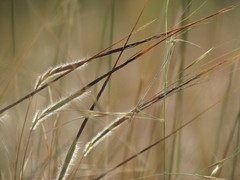
Heteropogon is a genus of annual and perennial plants in the grass family known generally as tangleheads, widespread primarily in tropical and subtropical regions.
Tangleheads are erect tussock grasses with paired spikelets. Lower pairs are equal in size (homogamous units), and upper pairs include one awned bisexual spikelet and one awnless sterile spikelet (heterogamous units).
The name of the genus is derived from the Ancient Greek words ἕτερος (héteros), meaning "different," and πώγων (pṓgōn), meaning "beard."
Species
Heteropogon contortus (L.) P.Beauv. ex Roem. & Schult. - Africa, southern Asia, southwestern Europe (Spain, France, Italy, Switzerland, Balkans), Mesoamerica, West Indies, tropical South America, southern United States (CA AZ NM TX FL HI), Northern Australia, various oceanic islands
Heteropogon fischerianus Bor - Tamil Nadu
Heteropogon melanocarpus (Elliott) Benth. - Mesoamerica, West Indies, tropical South America, southern United States (AZ TX AL FL GA NC SC), Africa, Madagascar, Yunnan, India, Oman
Heteropogon polystachyus (Roxb.) Schult. - Tamil Nadu
Heteropogon ritchiei (Hook.f.) Blatt. & McCann - India, Myanmar
Heteropogon triticeus (R.Br.) Stapf ex Craib - Southeast Asia, New Guinea, Queensland, Hainan, India, Sri Lanka
Formerly included
see Agenium Dichanthium Diectomis Diheteropogon Elymandra Hyparrhenia Parahyparrhenia Trachypogon
Read more on WikipediaChildren
Range
Greener is more native, amber more introduced; paler is less certain. How this was decided
Key traits
- Layer
- Grasses and sedges
- Plant type
- Annual Ornamental grasses and sedges Perennial
From USDA PLANTS.
Top native Heteropogon All
Native to the US, ranked by caterpillars, then bees and other hosts, food, flowers and shelter.