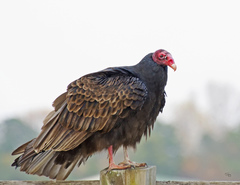
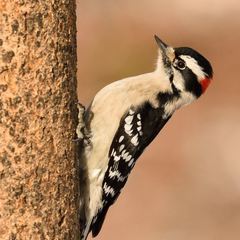
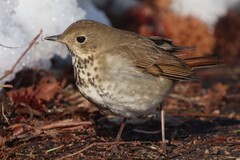
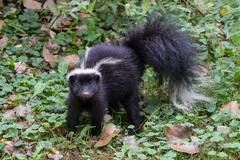
Plant eaters on Fox Grape

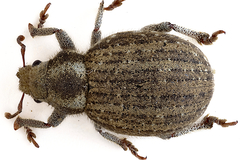
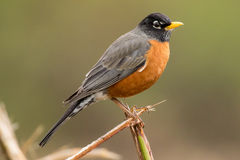
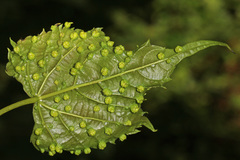
79 native animals that feed on it, most recorded first.
Not native to the US

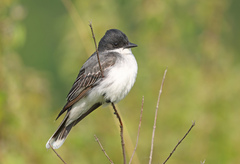
7 animals, most recorded first.
Nativity unknown

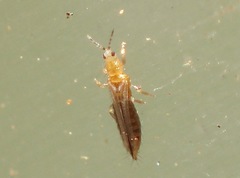
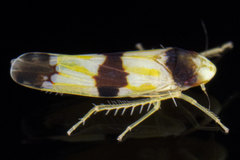
9 recorded only to genus or family, or with no nativity on record.
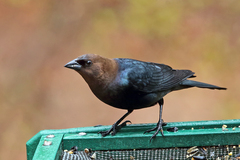
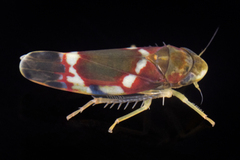
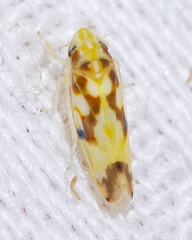
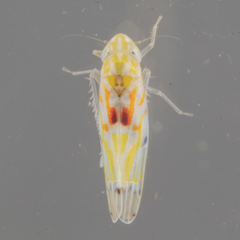
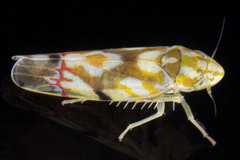
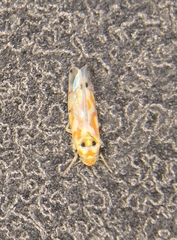
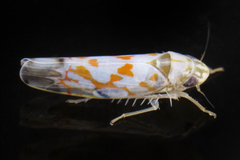
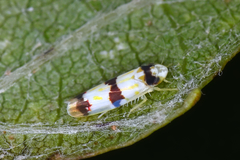
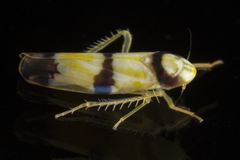
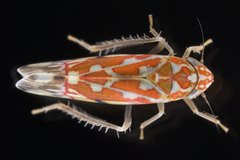
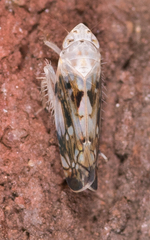
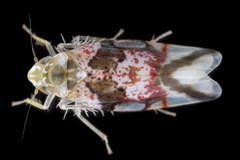
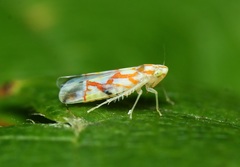
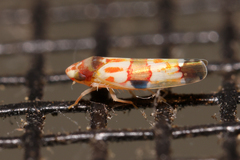
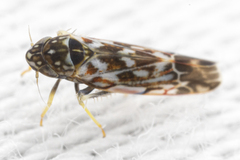
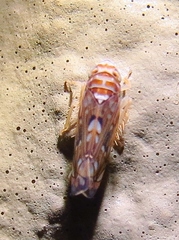
Osbornellus auronitens

on Fox Grape

Open

Plant eaters · handed down from grapevines

What the records say

  • Eaten by 2 records on grapevines

    Recorded on grapevines, and handed down to its species.

    • TaxonWorks 1 record

      Poelen, J. H. (2024). A biodiversity dataset graph: Biological Associations in TaxonWorks hash://sha256/e4a47c067d6c125da60c9a1b92b5eecdea539cb8666cd3aed99db347ae5b8ed0 hash://md5/686007de79cc2a49ab23fd3debe56e3f [Data set]. Zenodo. https://doi.org/10.5281/zenodo.11151783

    • Dmitriev (2026). 3i World Auchenorrhyncha Database.

    References

    • Trivellone, V., Mitrović, M., Dietrich, C.H. &amp; Toševski, I. (2017) <i>Osbornellus auronitens</i> (Hemiptera: Cicadellidae: Deltocephalinae), an introduced species new for the Palaearctic region. <i>The Canadian Entomologist</i>, 149(5), 551–559. https://doi.org/10.4039/tce.2017.7
    • @article{124121, author = {Trivellone, Valeria and Mitrović, Milana and Dietrich, Christopher Hallock and Toševski, Ivo}, journal = {The Canadian Entomologist}, month = {mar}, day = {20}, number = {5}, pages = {551-559}, publisher = {Cambridge University Press (CUP)}, title = {<i>Osbornellus auronitens</i> (Hemiptera: Cicadellidae: Deltocephalinae), an introduced species new for the Palaearctic region}, volume = {149}, year = {2017}, url = {https://doi.org/10.4039%2Ftce.2017.7}, abstract = {<b>Abstract</b>The introduction of invasive species may result in important ecological, environmental, and economic impacts. Extensive study of Auchenorrhyncha (Hemiptera) fauna in a wine-growing region in southern Switzerland revealed, for the first time, presence of the Nearctic leafhopper <i>Osbornellus auronitens</i> (Provancher) (Hemiptera: Cicadellidae) in the vicinity of Stabio (Canton of Ticino). The species identity of the collected specimens was confirmed using morphological and molecular characters. All specimens of <i>O. auronitens</i> were collected in a forest of <i>Castanea sativa</i> Miller (Fagaceae), <i>Corylus avellana</i> Linnaeus (Betulaceae), and <i>Alnus glutinosa</i> (Linnaeus) Gaertner (Betulaceae) intermixed with <i>Cornus sanguinea</i> Linnaeus (Cornaceae), <i>Salix</i> Linnaeus (Salicaceae), and <i>Rubus</i> Linnaeus (Rosaceae). In its native range this leafhopper is polyphagous and a relatively common visitor in vineyards. Based on analysis of the barcoding region of the mitochondrial cytochrome oxidase subunit I gene of the collected <i>O. auronitens</i>, 100% identity with specimens of the same species originating from Canada was determined. <i>Osbornellus auronitens</i> is morphologically similar to <i>Scaphoideus titanus</i> Ball (Hemiptera: Cicadellidae), another introduced Nearctic leafhopper, which was involved in severe outbreaks of disease caused by the Grapevine flavescence dorée phytoplasma (Bacteria: Acholeplasmataceae) in European viticultural regions since the 1960s. In this paper, we report the morphological features to distinguish <i>O. auronitens</i> from <i>S. titanus</i>, and discuss the possible implications of its expected spread across the Old World.}, issn = {0008-347X}, doi = {10.4039/tce.2017.7} }