species 3,330 observations
Bigelow's Sneezeweed
Helenium bigelovii
Field notes
Helenium bigelovii is a North American perennial plant in the sunflower family, commonly known as Bigelow's sneezeweed.
It grows in moist areas such as meadows, marshes, or streamsides. It is found at moderate and higher elevations (3000–10,000 ft) in the foothills and mountains of California and Oregon: Cascades, Coast Ranges, Klamath Mountains, Sierra Nevada, etc. Cultivars of the species are used in gardening as ornamentals.
Helenium bigelovii is a perennial herb sometimes as much as 130 cm (51 in; 4.5 ft) tall. One plant can produce as many as 20 flower heads, either one per branch or in branching arrays. Each head has 14-20 yellow ray florets (bending backwards and with teeth at the tips) surrounding sometimes as many as 800 disc florets (yellow at first, turning brown as they get older).
The species is named for J.M. Bigelow, a plant collector on the United States and Mexican Boundary Survey in the 1850s.
Read more on WikipediaSupports All
supported in the US
-
Caterpillars
Moths and butterflies raised on it
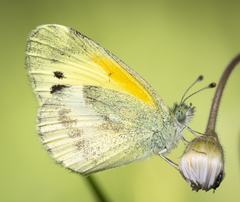 Dainty Sulphur
1
-
Specialist bees
Bees whose young are raised on the pollen of it
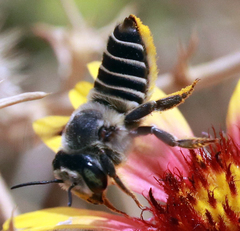
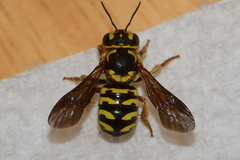

 Parallel Leafcutter Bee, Curved Pebble Bee, Horn-faced Leafcutter Bee, Small Long-horned Bee
5
-
Plant eaters
Animals that feed on it
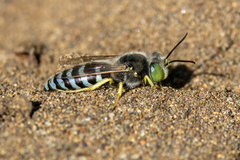 American Sand Wasp
1
-
Flower visitors
Pollinators and other flower visitors

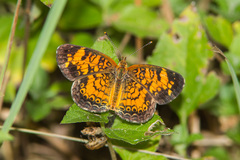

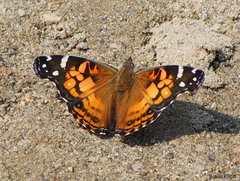 Juniper Hairstreak, Pearl Crescent, Colorado Black-notched Bumble Bee, American Lady
25
Range
Greener is more native, amber more introduced; paler is less certain. How this was decided
Key traits
- Layer
- Herbaceous plants
- Plant type
- Perennial Wildflower
From USDA PLANTS.