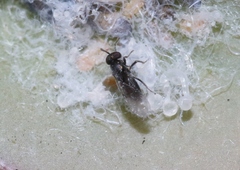
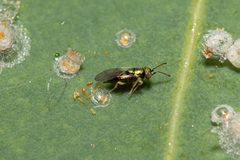
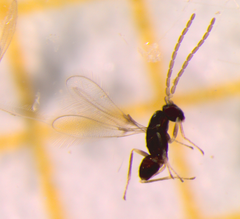
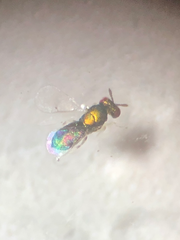
Sheltered animals on Tasmanian Blue Gum

3 native animals that nest or roost in it, most recorded first.
Not native to the US

1 animal, most recorded first.
Nativity unknown

4 recorded only to genus or family, or with no nativity on record.

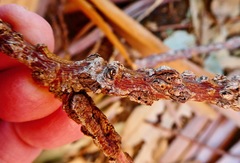
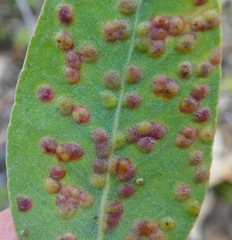
Eucalyptus Stem Gall Wasp

on Tasmanian Blue Gum

Open

Sheltered animals · recorded

What the records say

  • Habitat for 15 records
    • Ed Baker; Ian J. Kitching; George W. Beccaloni; Amoret Whitaker et al. (2016). Dataset: NHM Interactions Bank. Natural History Museum Data Portal (data.nhm.ac.uk). https://doi.org/10.5519/0060767

    • Universal Chalcidoidea Database curated in TaxonWorks.

    • TaxonWorks 3 records

      Poelen, J. H. (2024). A biodiversity dataset graph: Biological Associations in TaxonWorks hash://sha256/e4a47c067d6c125da60c9a1b92b5eecdea539cb8666cd3aed99db347ae5b8ed0 hash://md5/686007de79cc2a49ab23fd3debe56e3f [Data set]. Zenodo. https://doi.org/10.5281/zenodo.11151783

    • iNaturalist 2 records

      iNaturalist community observations of species interactions.

    References

    • Rinaldi, D.A.M.da F., Barbosa, L.R., Wilcken, C.F., Zache, B., Araújo, M.M. &amp; Carvalho, R.C.Z.de (2013) Occurrence of <i>Leptocybe invasa</i> (Hymenoptera: Eulophidae) in eucalyptus seedlings in the State of Parana, Brazil. <i>Pesquisa Florestal Brasileira</i>, 33(75), 327–330.
    • RinaldBaWi2013 via Universal Chalcidoidea Database
    • MendelPrFi2004 via Universal Chalcidoidea Database
    • Mendel, Z., Protasov, A., Fisher, N. &amp; La Salle, J. (2004) Taxonomy and biology of <i>Leptocybe invasa</i> gen. &amp; sp. n. (Hymenoptera: Eulophidae), an invasive gall inducer on <i>Eucalyptus</i>. <i>Australian Journal of Entomology</i>, 43(2), 101–113.
    • Malumphy, C. (2013) First record of the blue sum chalcid, <i>Leptocybe invasa</i> Fisher &amp; La Salle (Hymenoptera: Eulophidae), in the Canary Islands. <i>Entomologist's Monthly Magazine</i>, 149(1790-92), 162–163.

    and 10 more

  • Interacts with 1 record
    • iNaturalist 1 record

      iNaturalist community observations of species interactions.