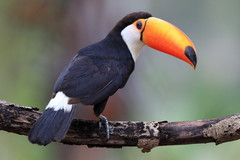
Plant eaters on Assai Palm

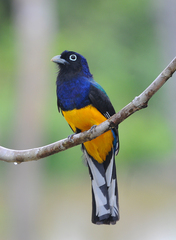
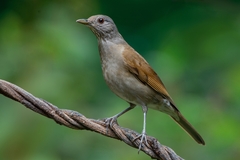
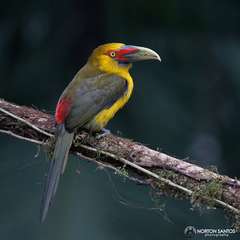
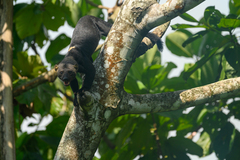
5 native animals that feed on it, most recorded first.
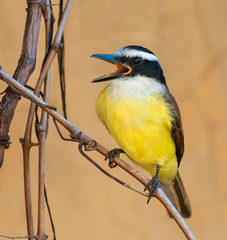
Not native to the US

6 animals, most recorded first.

Nativity unknown

45 recorded only to genus or family, or with no nativity on record.

South American Tapir

on Assai Palm

Open

Plant eaters · recorded

What the records say

  • Eaten by 10 records
    • Muñoz, G., Trøjelsgaard, K., & W.D. Kissling. 2018. A synthesis of animal-mediated seed dispersal of palms reveals distinct biogeographic differences in species interactions. Journal of Biogeography (in progress)

    • Bello 2017 3 records

      Bello, C., Galetti, M., Montan, D., Pizo, M. A., Mariguela, T. C., Culot, L., Bufalo, F., Labecca, F., Pedrosa, F., Constantini, R., Emer, C., Silva, W. R., da Silva, F. R., Ovaskainen, O. and Jordano, P. (2017), Atlantic frugivory: a plant–frugivore interaction data set for the Atlantic Forest. Ecology, 98: 1729. doi:10.1002/ecy.1818

    • Fuzessy, Lisieux and Pizo, Marco Aurélio (2025). NeoFrugivory: A comprehensive database for frugivory interactions and functional traits in the Neotropics.

    • Fricke, E.C., Svenning, J. Accelerating homogenization of the global plant–frugivore meta-network. Nature 585, 74–78 (2020). https://doi.org/10.1038/s41586-020-2640-y

    References

    • doi:10.1002/ecy.1818
    • Zona, S. & Henderson, A. (1989) A review of animal mediated seed dispersal of palms. Selbyana, 11, 6-21. Online Update 2006 ((http://www.virtualherbarium.org/palms/psdispersal.html).
    • Galetti M, Keuroghlian A, Hanada L, Morato MI, 2001. Frugivory and seed dispersal by the Lowland Tapir (Tapirus terrestris) in Southeast Brazil.
    • Galetti M, Guevara R, Cortes MC, Fadini R, Von Mater S, Leite AB Labecca F, Ribeiro T, Carvalho CS, Collevatti RG, Pires MM, Guimaraes PR, Brancalion PH, Ribeiro MC, Jordano P, 2013. Functional extinction of birds drives rapid evolutionary changes in seed size.
    • Castro, E. R.; Galetti, M.; Morellato, L. P. C.. 2007. Reproductive phenology of Euterpe edulis (Arecaceae) along a gradient in the Atlantic rainforest of Brazil. Australian Journal of Botany. 725-735

    and 2 more