genus
New World Orioles
Icterus
Field notes
New World orioles are a group of birds in the genus Icterus of the blackbird family. Although they are not closely related to Old World orioles of the family Oriolidae, they are strikingly similar in size, diet, behavior, and strongly contrasting plumage. As a result, the two have been given the same vernacular name.
Males are typically black and vibrant yellow or orange with white markings, females and immature birds duller. They molt annually. New World orioles are generally slender with long tails and a pointed bill. They mainly eat insects, but also enjoy nectar and fruit. The nest is a woven, elongated pouch. Species nesting in areas with cold winters are strongly migratory, while subtropical and tropical species are more sedentary.
The name "oriole" was first recorded (in the Latin form oriolus) by the German Dominican friar Albertus Magnus in about 1250, which he erroneously stated to be onomatopoeic, from the song of the European golden oriole.
One of the species in the genus, Bahama oriole, is considered endangered, formerly critically endangered, by the International Union for Conservation of Nature.
Read more on WikipediaChildren
- Baltimore Oriole native
- Hooded Oriole native
- Orchard Oriole native
- Bullock's Oriole native
- Altamira Oriole native
- Streak-backed Oriole native
- Scott's Oriole native
- Black-backed Oriole
- Black-vented Oriole
- Yellow Oriole
- Audubon's Oriole native
- Venezuelan Troupial introduced
- Spot-breasted Oriole introduced
- Black-cowled Oriole
- Orange-backed Troupial
- Bullock's × Baltimore Oriole native
- Altamira × Audubon's Oriole
- Orchard × Hooded Oriole
Range
Greener is more native, amber more introduced; paler is less certain. How this was decided
Most observed native new world orioles All
Native to the US, by observations.
-
 Baltimore Oriole
Icterus galbula
76,174 observations
-
 Hooded Oriole
Icterus cucullatus
38,076 observations
-
 Orchard Oriole
Icterus spurius
30,508 observations
-
 Bullock's Oriole
Icterus bullockii
22,569 observations
-
 Altamira Oriole
Icterus gularis
12,440 observations
-
 Streak-backed Oriole
Icterus pustulatus
11,506 observations
-
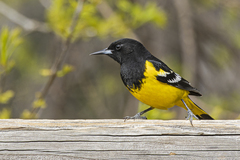 Scott's Oriole
Icterus parisorum
6,523 observations
-
 Audubon's Oriole
Icterus graduacauda
2,692 observations