genus
Grasspinks
Calopogon
Field notes
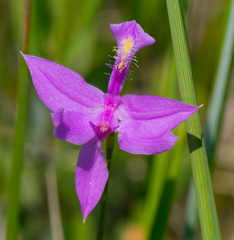
Calopogon, grass pink, is a genus of terrestrial orchids (family Orchidaceae). The generic name is from Greek and means "beautiful beard", referring to the cluster of hairs adorning the labellum. The five species are native to the eastern United States, eastern Canada, Cuba and the Bahamas. The genus Calopogon is abbreviated Cpg in trade journals.
Calopogon, like many other orchids, is an indicator species for good remnant hydrology. This means that their presence is an indication of high-quality ground and surface water. Most species of Calopogon frequent wet, sunny swales, bogs, and the edges of marshy areas, and associate with ferns, sedges, grasses and forbs. Calopogon oklahomensis has been observed in drier areas than Calopogon tuberosus would prefer.
One distinguishing feature of the grass pinks is that, unlike most orchids, they are non-resupinate. The lip of calopogon is on the top of the flower, not the bottom, as is common with most other genera. The brushy, yellow protuberances on the lip are also designed to attract pollinators, but they only tempt without providing a reward. To add injury to insult, the flower then snaps closed when a potential pollinator lands on it, and the insect has to crawl out of the tight quarters between the lip and the reproductive parts below in order to escape, hopefully pollinating the flower in the process.
The other deception they use is their frequent association with nectar-bearing flowers of the same color; Calopogon is often an associate of the magenta marsh phlox, in the northern United States, the phlox bearing nectar to reward curious insects while the deceptive but showy Calopogon does not.
Read more on WikipediaChildren
Range
Greener is more native, amber more introduced; paler is less certain. How this was decided
Key traits
- Layer
- Herbaceous plants
- Plant type
- Perennial Wildflower
From USDA PLANTS.
Top native grasspinks All
Native to the US, ranked by caterpillars, then bees and other hosts, food, flowers and shelter.