species 1,198 observations
Anderson's Buttercup
Ranunculus andersonii
Field notes
Ranunculus andersonii is a species of buttercup known by the common name Anderson's buttercup. It is native to the western United States, including the Great Basin and surrounding regions, where it grows in sagebrush, woodlands, and other habitat. It is a perennial herb producing a basal rosette of thick leaves which are each divided into three double-lobed leaflets at the end of a petiole. The inflorescence arises from the rosette on an erect, leafless stalk usually no more than 20 centimeters tall. It bears one flower with usually five white or red-tinged petals each up to 2 centimeters long with white or pinkish sepals at the base. At the center of the flower are many yellow stamens and pistils. The fruit is an achene, borne in a spherical cluster of 14 or more. It was named after Charles Lewis Anderson by Asa Gray.
Read more on WikipediaSupports All
supported in the US
-
Specialist bees
Bees whose young are raised on the pollen of it
 Caerulean Miner Bee
1
-
Plant eaters
Animals that feed on it

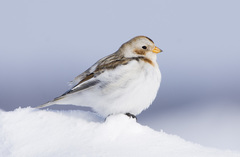

 Wild Turkey, Snow Bunting, American Wigeon, American Winter Ant
12
-
Flower visitors
Pollinators and other flower visitors


 Margined Calligrapher, Western Calligrapher, Variable Duskyface Fly, Common Ringlet
36
Range
Greener is more native, amber more introduced; paler is less certain. How this was decided
Key traits
- Layer
- Herbaceous plants
- Plant type
- Perennial Wildflower
From USDA PLANTS.