species 1,353 observations
Texas Blueweed
Helianthus ciliaris
Field notes
Helianthus ciliaris is a species of sunflower known by the common names Texas blueweed and yerba parda.
Helianthus ciliaris grows in much of the south-central and southwestern United States (from Texas north to Kansas and west to California) and northern Mexico (from Tamaulipas west to Sonora and south to Durango and San Luis Potosí), but it can be found elsewhere in North America where it is an introduced species and often a noxious weed. It is weedy even in much of its native range, growing readily in disturbed areas, on cultivated land, and along the roadside. It grows well in moist areas such as drainage ditches.
Helianthus ciliaris is a perennial herb with distinctive blue-green foliage growing to heights of 40 to 70 centimeters (16-28 inches). It has a tough, horizontally spreading root system which sprouts new plants at distances from the parent, and can also sprout after being fragmented, so plowing the plant under can actually help it spread. The leaves are variable in size, shape, and arrangement, but are generally narrowly lance-shaped and wavy with rough hairs along the edges. The inflorescence holds a mass of at least 35 yellow-tipped red disc florets often surrounded by a fringe of 10-18 curling yellow ray florets, although some heads lack ray florets.
Read more on WikipediaSupports All
supported in the US
-
Caterpillars
Moths and butterflies raised on it


 Bordered Patch, Salt Marsh Moth, Virginian Tiger Moth, Silvery Checkerspot
40
-
Specialist bees
Bees whose young are raised on the pollen of it

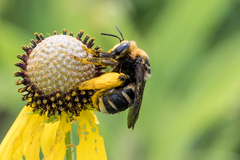

 Carpenter-mimic Leafcutter Bee, Oblique Longhorn Bee, Dark-veined Longhorn Bee, Pugnacious Leafcutter Bee
34
-
Hosted animals
Gall makers, leaf miners and other animals living on or in it


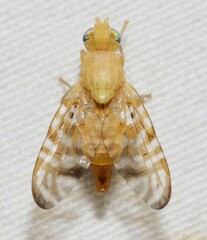 Sawtooth Sunflower Midge, Calycomyza platyptera, Gymnocarena diffusa
3
-
Plant eaters
Animals that feed on it


 Red-winged Blackbird, American Goldfinch, Eastern Fox Squirrel, Common Grackle
39
-
Flower visitors
Pollinators and other flower visitors

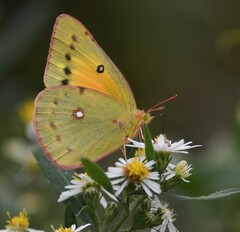

 Checkered White, Orange Sulphur, Variegated Fritillary, Sleepy Orange
116
-
Sheltered animals
Animals that nest or roost in it
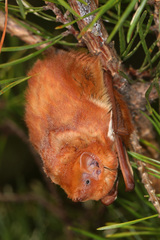 Eastern Red Bat
1
Range
Greener is more native, amber more introduced; paler is less certain. How this was decided
Key traits
- Layer
- Herbaceous plants
- Plant type
- Perennial Wildflower
From USDA PLANTS.