species 2,002 observations
Coulter's Fleabane
Erigeron coulteri
Field notes
Erigeron coulteri is a species of flowering plant in the family Asteraceae known by the common names large mountain fleabane, Coulter's fleabane, and Coulter's daisy.
Erigeron coulteri is native to much of the western United States where it grows in moist forests and meadows. It has been found in California, Nevada, Colorado, New Mexico, Wyoming, Montana, Oregon, and Idaho, though there are large stretches of land in between known populations.
Erigeron coulteri is a perennial herb reaching maximum heights of 20-70 centimeters (8-28 inches). It has an erect stem which may have a few branches or none. There are leaves on its stem as well as at its base. The long leaves are somewhat lance-shaped to more rounded, and sometimes have a few teeth along the edges. The inflorescence atop the stem has one to four flower heads, each between one and two centimeters (0.4-0.8 inches) wide. The center is packed with tiny golden yellow disc florets and the circumference is fringed with up to 140 white ray florets.
Read more on WikipediaSupports All
supported in the US
-
Caterpillars
Moths and butterflies raised on it


 Wavy-lined Emerald, Northern Checkerspot, Sierra Nevada Checkerspot, Pearl Crescent
10
-
Specialist bees
Bees whose young are raised on the pollen of it


 Pugnacious Leafcutter Bee, Sunflower Burrowing-Resin Bee, Horn-faced Leafcutter Bee, Small Long-horned Bee
12
-
Hosted animals
Gall makers, leaf miners and other animals living on or in it

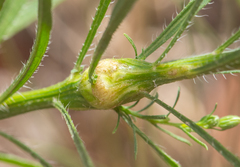

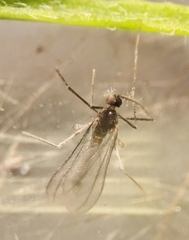 Beautiful Fleabane Root-borer, Neolasioptera erigerontis, Asteromyia modesta, Rhopalomyia erigerontis
4
-
Plant eaters
Animals that feed on it


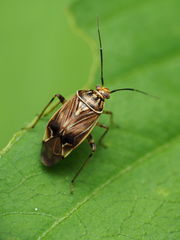 Large Fleabane Daisy Aphid, Wild Turkey, North American Tarnished Plant Bug
3
-
Flower visitors
Pollinators and other flower visitors

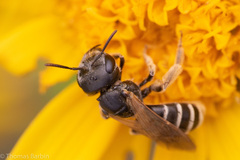

 Arctic Blue, Ligated Furrow Bee, Margined Calligrapher, Tiny Small Carpenter
121
Range
Greener is more native, amber more introduced; paler is less certain. How this was decided
Key traits
- Layer
- Herbaceous plants
- Plant type
- Perennial Wildflower
From USDA PLANTS.