species 107,139 observations
Creosote Bush
Larrea tridentata
Field notes
Larrea tridentata, also called creosote bush, greasewood as a plant, and chaparral as a medicinal herb. In Sonora, it is more commonly called hediondilla; Spanish hediondo = "smelly". It is a flowering plant in the family Zygophyllaceae. The specific name tridentata refers to its three-toothed leaves.
Read more on WikipediaSupports All
227
native animals
supported in the US
supported in the US
-
Caterpillars
Moths and butterflies raised on it


 Creosote Bush Bagworm, Creosote Moth, White-lined Sphinx, Synglochis perumbraria
4
-
Specialist bees
Bees whose young are raised on the pollen of it
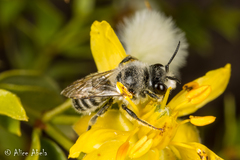

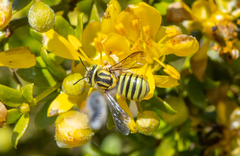
 Creosote Small-Mason, Encelia Megandrena, Trachusa larreae, Creosote Bush Ancylandrena
7
-
Hosted animals
Gall makers, leaf miners and other animals living on or in it


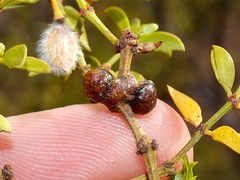
 Large Creosote Gall Midge, Creosote Cone Gall Midge, Creosote Resin Gall Midge, Creosote Leafy Bud Gall Midge
20
-
Plant eaters
Animals that feed on it

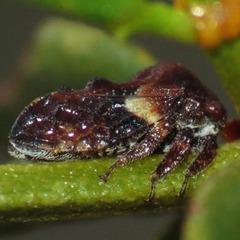
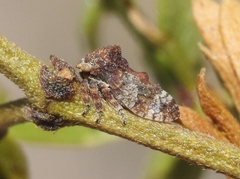
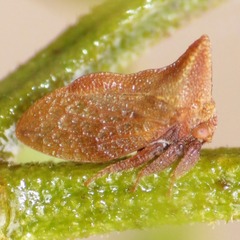 Creosote Lac Scale, Centrodontus atlas, Multareis cornutus, Multareoides bifurcatus
22
-
Flower visitors
Pollinators and other flower visitors
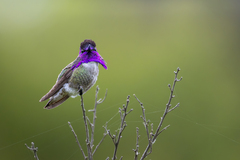
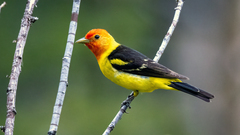

 Costa's Hummingbird, Western Tanager, Marine Blue, Valley Carpenter Bee
174
Children
Range
Greener is more native, amber more introduced; paler is less certain. How this was decided
Key traits
- Layer
- Shrubs
- Light
- Part shade
- Moisture
- Dry Well drained
- Water use
- Low
- Soil pH
- Neutral
- Deer resistant
- Yes
- Habit
- Ascending Dense Multi stemmed
From NC State Extension, the Lady Bird Johnson Wildflower Center and USDA PLANTS.