species 6,287 observations
Mountain Whitethorn
Ceanothus cordulatus
Field notes
Ceanothus cordulatus is a species of shrub in the family Rhamnaceae known by the common names mountain whitethorn and whitethorn ceanothus. It is native to California and adjacent sections of Oregon, Nevada, and Baja California, where it grows on mountain ridges and other forested areas. This is a spreading shrub growing usually wider than tall and up to about 1.5 meters. The stems are gray, with the twigs yellow-green in color and fuzzy in texture when new. The evergreen leaves are alternately arranged and up to 3 centimeters long. Each is oval in shape with three ribs and generally not toothed. The leaves may be hairy or not. The inflorescence is panicle-shaped, up to about 4 centimeters long. The flowers are white to off-white with five sepals and five petals. The fruit is a rough, ridged capsule up to half a centimeter long. It has three valves inside, each containing a seed. It is a nitrogen-fixing plant, that is uniquely abundant in old-growth forest conditions when compared to similar types of nitrogen-fixing plants. In addition, Ceanothus cordulatus is known to be an important source of nitrogen patches for significantly longer times than other similar post-disturbance successional shrubs, following disturbance events such as forest fires.
Read more on WikipediaSupports All
supported in the US
-
Caterpillars
Moths and butterflies raised on it


 California Tortoiseshell, Pale Swallowtail, Ceanothus Silk Moth, Western Sheep Moth
45
-
Hosted animals
Gall makers, leaf miners and other animals living on or in it

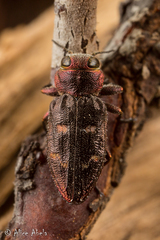 Ceanothus Bud Gall Midge, Pacific Flat-Headed Borer
2
-
Plant eaters
Animals that feed on it


 Margined Calligrapher, White-bowed Smoothwing, Common Grass Skimmer, Western Yellowjacket
16
-
Flower visitors
Pollinators and other flower visitors


 Black-tailed Bumble Bee, Yellow-faced Bumble Bee, Echo Azure, Mylitta Crescent
73
Range
Greener is more native, amber more introduced; paler is less certain. How this was decided
Key traits
From USDA PLANTS and the Lady Bird Johnson Wildflower Center.