species 373 observations
Dandelion Hawksbeard
Crepis runcinata
Field notes
Crepis runcinata is a North American species of flowering plant in the family Asteraceae known by the common name fiddleleaf hawksbeard. It is native to western and central Canada (from British Columbia to Manitoba), the western and central United States (from the Pacific as far east as Minnesota, Iowa, western Kansas and northwestern Texas) and northern Mexico (Chihuahua).
Crepis runcinata grows in many types of habitats. It is a variable species with many subspecies. In general it is a perennial herb growing an erect, hairless, mostly leafless, unbranching stem up to about 80 centimeters (32 inches) tall from a taproot. The hairless leaves are arranged about the base of the plant in a rosette, each somewhat narrowly oval with many toothlike triangular lobes or sometimes lacking lobes. The inflorescence produces flower heads with hairy, glandular phyllaries and many yellow ray florets but no disc florets. The fruit is a small achene with a pappus.
Subspecies
Crepis runcinata subsp. andersonii (A.Gray) Babc. & Stebbins – California, Nevada
Crepis runcinata subsp. barberi (Greenm.) Babc. & Stebbins – Arizona, Nevada, New Mexico, Chihuahua.
Crepis runcinata subsp. glauca (Nutt.) Babc. & Stebbins – Alberta, Manitoba, Saskatchewan; Arizona, Colorado, Idaho, Montana, North Dakota, Nevada, New Mexico, North Dakota, South Dakota, Texas, Utah, Wyoming
Crepis runcinata subsp. hallii Babc. & Stebbins – California, Nevada
Crepis runcinata subsp. hispidulosa (Howell ex Howell) Babc. & Stebbins – Alberta, Saskatchewan; Colorado, Idaho, Montana, North Dakota, Oregon, Utah, Washington, Wyoming
Crepis runcinata subsp. imbricata Babc. & Stebbins – Nevada, Oregon
Crepis runcinata subsp. runcinata – Alberta, British Columbia, Manitoba, Saskatchewan; Colorado, Idaho, Minnesota, Montana, Nebraska, Nevada, New Mexico, North Dakota, Oregon, South Dakota, Utah, Washington, Wyoming
Read more on WikipediaSupports All
supported in the US
-
Caterpillars
Moths and butterflies raised on it

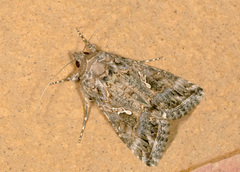 Setaceous Hebrew Character, Cabbage Looper Moth
2
-
Plant eaters
Animals that feed on it


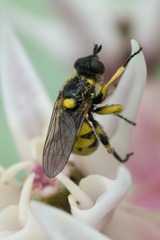
 Black-footed Drone Fly, Western Aphideater, Dalmannia pacifica, Greater Sage-Grouse
9
-
Flower visitors
Pollinators and other flower visitors

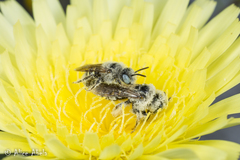

 Cresson's Mining Bee, Desert-dandelion Nomadopsis, Variable Checkerspot, Large-tailed Aphideater
26
Children
Range
Greener is more native, amber more introduced; paler is less certain. How this was decided
Key traits
- Layer
- Herbaceous plants
- Plant type
- Perennial Wildflower
From USDA PLANTS.