genus
Bluebells
Mertensia
Field notes
Mertensia is a genus of flowering plants in the borage family Boraginaceae. They are perennial herbaceous plants with blue or sometimes white flowers that open from pink-tinged buds. Such a change in flower color is common in Boraginaceae and is caused by changes in soil pH. Mertensia is one of several plants that are commonly called "bluebell". In spite of their common name, the flowers are usually salverform (trumpet-shaped) rather than campanulate (bell-shaped).
Mertensia is native to most of North America and to a large part of Asia from western China to northeastern Russia. Its center of diversity is in the Rocky Mountains. Mertensia is mostly restricted to alpine, subalpine, and montane habitats. Notable exceptions are Mertensia maritima, a maritime plant of Arctic and subarctic coastlines, and Mertensia virginica, which is found from the Appalachian Mountains west to Minnesota, Iowa, and Missouri. Most of the species are endemic to very small areas of the Rocky Mountains.
Mertensia virginica has the largest flowers in the genus and is commonly cultivated. It is sparingly naturalized in Europe. About 12 other species are known in cultivation. The Inuit ate the rhizomes of Mertensia maritima.
Many of the species of Mertensia are hard to distinguish and some are possibly cryptic. Around 150 species names have been published in Mertensia. Most authors have recognized about 45 species, but in 2014, the authors of a molecular phylogenetic study recommended the acceptance of at least 62.
Read more on WikipediaChildren 24 of 35
- Virginia Bluebells native
- Tall Bluebell native
- Mountain Bluebells native
- Prairie Bluebells native
- Oysterplant present
- Sagebrush Bluebell native
- Long Bluebells native
- Shortstyle Bluebells native
- Franciscan Bluebells native
- Aspen Bluebells native
- Fendler's Bluebell present
- Broadleaf Bluebells native
- Macdougal's Bluebell native
- Kamchatka Bluebells present
- Alpine Bluebells
- Oregon Lungwort native
- Sierra Bluebells native
- Ovate Bluebells
- Toiyabe Bluebells native
- Greenleaf Bluebells
- Rocky Mountain Bluebells native
- Broadleaf Bluebells
- Alpine Bluebell
- Baker's Bluebells
Range
Greener is more native, amber more introduced; paler is less certain. How this was decided
Key traits
- Layer
- Herbaceous plants
- Plant type
- Annual Perennial Wildflower
From USDA PLANTS.
Top native bluebells All
Native to the US, ranked by caterpillars, then bees and other hosts, food, flowers and shelter.
-
 Mountain Bluebells
Mertensia ciliata
caterpillars
2
food
1
flowers
15
-
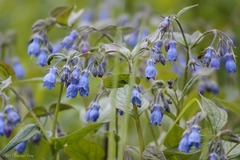 Tall Bluebell
Mertensia paniculata
caterpillars
2
flowers
14
-
 Virginia Bluebells
Mertensia virginica
caterpillars
1
hosts
1
flowers
58
-
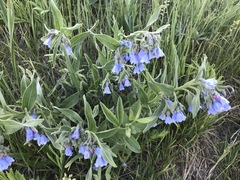 Prairie Bluebells
Mertensia lanceolata
flowers
21
-
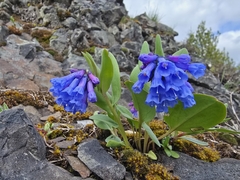 Long Bluebells
Mertensia longiflora
flowers
10
-
 Shortstyle Bluebells
Mertensia brevistyla
flowers
8
-
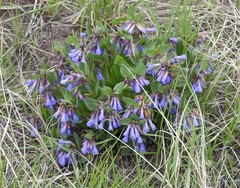 Sagebrush Bluebell
Mertensia oblongifolia
flowers
6
-
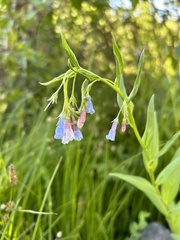 Franciscan Bluebells
Mertensia franciscana
flowers
5
-
 Aspen Bluebells
Mertensia arizonica
flowers
4
-
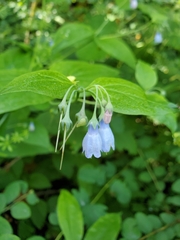 Broadleaf Bluebells
Mertensia subcordata
flowers
4
-
 Oregon Lungwort
Mertensia bella
flowers
4
-
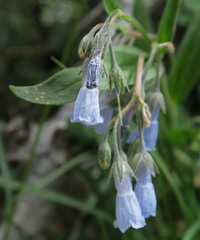 Toiyabe Bluebells
Mertensia cusickii
flowers
4
-
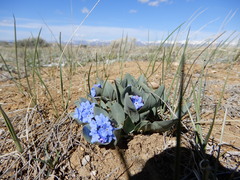 Rocky Mountain Bluebells
Mertensia humilis
flowers
4
-
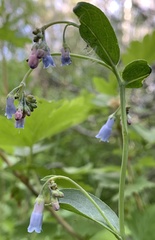 Short-sepal Bluebells
Mertensia brachycalyx
flowers
4
-
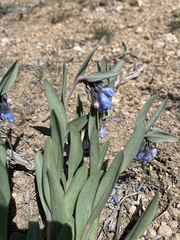 Sierra Bluebells
Mertensia nevadensis
flowers
3