species 18,147 observations
Buffalo Gourd
Cucurbita foetidissima
Field notes
Cucurbita foetidissima is a tuberous xerophytic plant found in the central and southwestern United States and northern Mexico. It has numerous common names, but is most commonly called the buffalo gourd in English. The type specimen was collected from Mexico by Alexander von Humboldt and Aimé Bonpland sometime before 1817. In Latin, foetidissima means most unpleasant smell.
The buffalo gourd has evolved in the semiarid regions and is well-adapted to desert environments. It contains high amounts of protein and carbohydrates and yields abundant oil. The carbohydrates that are formed in the tap root have led to the idea of growing the plant for biofuel.
The fruit is consumed by both humans and animals. When mature, a stage marked by increasing desiccation of vine, leaves, fruit-stem, and fruit, the fruit begins its final gourd stage.
Geographic location and genetics make it highly likely that Cucurbita scabridifolia originated as a naturally occurring hybrid of C. foetidissima and Cucurbita pedatifolia.
Read more on WikipediaSupports All
supported in the US
-
Caterpillars
Moths and butterflies raised on it


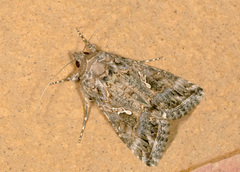
 Clearwing Borer Moth, Cucumber Moth, Cabbage Looper Moth, Fire-flag Plume Moth
4
-
Specialist bees
Bees whose young are raised on the pollen of it


 Pruinose Squash Bee, Nimble Squash Bee, Red-tailed Squash Bee
3
-
Plant eaters
Animals that feed on it


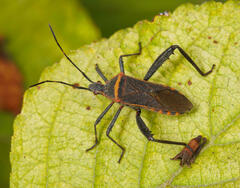 Mottled Duck, Gunnison's Prairie Dog, Oleander Scale, Phthiacnemia picta
6
-
Flower visitors
Pollinators and other flower visitors


 Spotted Cucumber Beetle, Checkered Melon Beetle, Acalymma blandulum, Eichlinia gloriosa
36
-
Sheltered animals
Animals that nest or roost in it
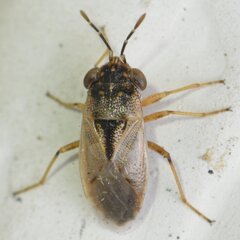 Western Big-eyed Bug
1
Range
Greener is more native, amber more introduced; paler is less certain. How this was decided
Key traits
From USDA PLANTS and the Lady Bird Johnson Wildflower Center.