species 16,181 observations
Desert Broom
Baccharis sarothroides
Field notes
Baccharis sarothroides is a North American species of flowering shrub known by the common names broom baccharis, desertbroom, greasewood, rosin-bush and groundsel in English and "escoba amarga" or "romerillo" in Spanish. This is a spreading, woody shrub usually sticky with glandular secretions along the primarily leafless green stems. The small, thick leaves are a few centimeters long and are absent much of the year, giving the shrub a spindly, twiggy appearance. It flowers abundantly with tiny green blooms on separate male and female plants.
Native to the Sonoran Desert of northwestern Mexico (Baja California, Baja California Sur, Sinaloa, Sonora) and the Southwestern United States (southern California, Arizona, New Mexico, western Texas), it is common in gravelly dry soils and disturbed areas.
Read more on WikipediaSupports All
supported in the US
-
Caterpillars
Moths and butterflies raised on it


 Schinia oculata, Desert Broom Stem Gall Moth, Fatal Metalmark, Salt Marsh Moth
6
-
Specialist bees
Bees whose young are raised on the pollen of it

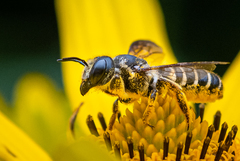
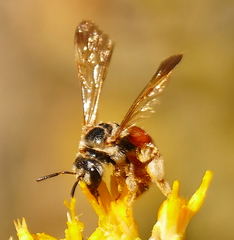
 Parallel Leafcutter Bee, Hostile Leaf-cutter Bee, Nevada Nomia, Dark-faced Longhorn Bee
5
-
Hosted animals
Gall makers, leaf miners and other animals living on or in it


 Desert Broom Gallfly, Neolasioptera lathami, Bumelia Borer
3
-
Plant eaters
Animals that feed on it
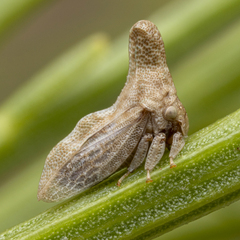


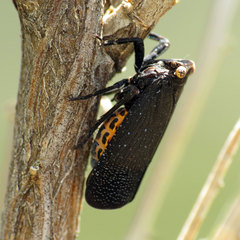 Hypsoprora nogolata, Convergent Lady Beetle, Small Milkweed Bug, Orange-tailed Speckled Lanternfly
28
-
Flower visitors
Pollinators and other flower visitors


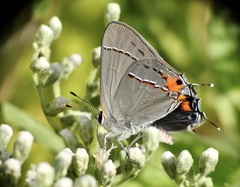
 Fiery Skipper, Golden Paper Wasp, Gray Hairstreak, Queen
140
-
Sheltered animals
Animals that nest or roost in it
 Eupelmus
1
Range
Greener is more native, amber more introduced; paler is less certain. How this was decided
Key traits
From USDA PLANTS and the Lady Bird Johnson Wildflower Center.