superfamily
Planthoppers
Fulgoroidea
Field notes
A planthopper is any insect in the infraorder Fulgoromorpha, in the suborder Auchenorrhyncha, a group exceeding 12,500 described species worldwide. The name comes from their remarkable resemblance to leaves and other plants of their environment and that they often "hop" for quick transportation in a similar way to that of grasshoppers. However, planthoppers generally walk very slowly. Distributed worldwide, all members of this group are plant-feeders, though few are considered pests. Fulgoromorphs are most reliably distinguished from the other Auchenorrhyncha by two features: the bifurcate (Y-shaped) anal vein in the forewing, and the thickened, three-segmented antennae, with a generally round or egg-shaped second segment (pedicel) that bears a fine filamentous arista.
Read more on WikipediaChildren
- Derbid Planthoppers 40 native
- Achilid Planthoppers 29 native
- Lanternbugs 20 native
- Piglet Bugs 20 native
- Issid Planthoppers 17 native
- Tropiduchid Planthoppers 16 native
- Dictyopharid Planthoppers 13 native
- Flatid Planthoppers 12 native
- Acanaloniid Planthoppers 11 native
- Ricaniid Planthoppers
- Nogodinid Planthoppers
- Lophopid Planthoppers
Range
Greener is more native, amber more introduced; paler is less certain. How this was decided
Most observed native planthoppers All
Native to the US, by observations.
-
 Citrus Flatid Planthopper
Metcalfa pruinosa
31,433 observations
-
 Northern Flatid Planthopper
Flatormenis proxima
21,250 observations
-
 Green Cone-headed Planthopper
Acanalonia conica
18,896 observations
-
 Ormenoides venusta
9,062 observations
-
 Acanalonia servillei
2,716 observations
-
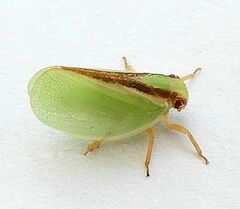 Acanalonia fasciata
53 observations
-
 Synecdoche nemoralis
32 observations
-
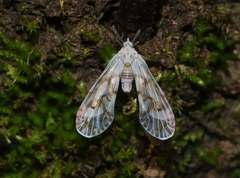 Anotia caliginosa
29 observations
-
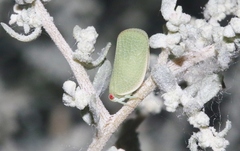 Acanalonia clypeata
25 observations
-
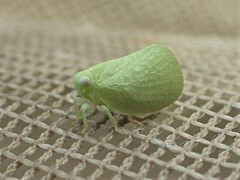 Acanalonia pumila
21 observations
-
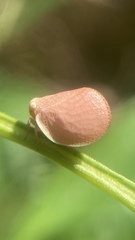 Acanalonia laticosta
11 observations
-
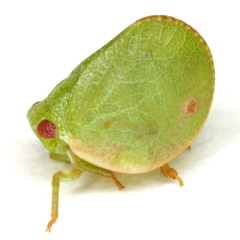 Acanalonia parva
10 observations
-
 Anotia lineata
9 observations
-
 Juniperthia producta
8 observations
-
 Acanalonia immaculata
7 observations