genus
Liveforever
Dudleya
Field notes
Dudleya, commonly known as liveforevers, is a genus of rosette-forming succulent plants in the stonecrop family, Crassulaceae, consisting of about ~70 taxa found in southwestern North America and Guadalupe Island. The genus is very morphologically diverse, with species ranging from large evergreen plants to tiny deciduous geophytic plants. The flowers of Dudleya have parts numbered in fives, with the petals arranged in tubular, star-shaped, or bell-shaped forms and, when fruiting, are filled with tiny, crescent-shaped seeds.
The genus evolved as neoendemics, from ancestors in the stonecrop genus, Sedum. The ancestors probably radiated southward from Sedum during the creation of the dry summer climate, in the California region, five million years ago. Early botanists classified the larger species as Echeveria and Cotyledon, while the geophytic species were placed under Sedum. Taxonomic efforts, started by Joseph Nelson Rose and Nathaniel Lord Britton, created three genera, including Dudleya. These genera were all eventually subsumed into Dudleya proper with the work of Reid Moran. Phylogenetic research is still at an early stage in the genus, and is complicated by the fact that many species are becoming endangered and over-harvested (poached).
Dudleya is a relatively obscure genus, in comparison to other, more widely cultivated succulents; converging interests, by succulent collectors, native plant enthusiasts and gardeners alike, have led to the wider cultivation of many species as ornamental plants. In the wild, many species of Dudleya are vulnerable, as land development and poachers often threaten particularly niche populations of plants. Poached plants are often shipped to East Asia, especially South Korea, where hybridisation and cultivation of succulents is very popular. Conservationists, nurseries and governments combat Dudleya poaching through propagation programs and protection laws.
Read more on WikipediaChildren 24 of 43
- Lanceleaf Liveforever native
- Chalk Dudleya native
- Canyon Liveforever native
- Bluff Lettuce native
- Panamint Liveforever native
- Fingertips native
- Coast Dudleya native
- Abrams' Liveforever native
- Arizona Chalk Dudleya native
- Tapertip Liveforever native
- Green Liveforever native
- Greene's Dudleya native
- Giant Liveforever
- Variegated Liveforever native
- Knife-leaved Liveforever
- Blochman's Dudleya native
- Palmer's Dudleya native
- San Gabriel Mountains Dudleya native
- Short-leaved Liveforever native
- Anthony's Liveforever
- Many-stemmed Dudleya native
- Candleholder Dudleya native
- White-Flower Liveforever
- La Mision Liveforever present
Range
Greener is more native, amber more introduced; paler is less certain. How this was decided
Key traits
- Layer
- Herbaceous plants
- Plant type
- Perennial Wildflower
From USDA PLANTS.
Top native liveforever All
Native to the US, ranked by caterpillars, then bees and other hosts, food, flowers and shelter.
-
 Variegated Liveforever
Dudleya variegata
caterpillars
3
flowers
2
-
 Blochman's Dudleya
Dudleya blochmaniae
caterpillars
3
flowers
2
-
 Green Liveforever
Dudleya virens
caterpillars
2
flowers
10
-
 Canyon Liveforever
Dudleya cymosa
caterpillars
2
flowers
6
-
 Fingertips
Dudleya edulis
caterpillars
2
flowers
6
-
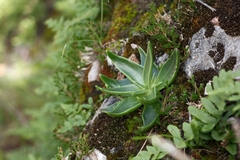 Lanceleaf Liveforever
Dudleya lanceolata
caterpillars
2
flowers
4
-
 Chalk Dudleya
Dudleya pulverulenta
caterpillars
2
flowers
4
-
 Bluff Lettuce
Dudleya farinosa
caterpillars
2
flowers
4
-
 Many-stemmed Dudleya
Dudleya multicaulis
caterpillars
2
flowers
4
-
 Coast Dudleya
Dudleya cespitosa
caterpillars
2
flowers
3
-
 Palmer's Dudleya
Dudleya palmeri
caterpillars
2
flowers
3
-
 Panamint Liveforever
Dudleya saxosa
caterpillars
2
flowers
2
-
 Abrams' Liveforever
Dudleya abramsii
caterpillars
2
flowers
2
-
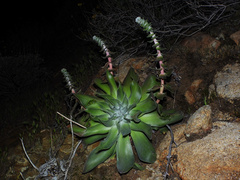 Arizona Chalk Dudleya
Dudleya arizonica
caterpillars
2
flowers
2
-
 Tapertip Liveforever
Dudleya attenuata
caterpillars
2
flowers
2