genus
Fritillaries
Fritillaria
Field notes
Fritillaria (fritillaries) is a genus of spring flowering herbaceous bulbous perennial plants in the lily family (Liliaceae). The type species, Fritillaria meleagris, was first described in Europe in 1571, while other species from the Middle East and Asia were also introduced to Europe at that time. The genus has about 130–140 species divided among eight subgenera. The flowers are usually solitary, nodding and bell-shaped with bulbs that have fleshy scales, resembling those of lilies. They are known for their large genome size and genetically are very closely related to lilies. They are native to the temperate regions of the Northern Hemisphere, from the Mediterranean and North Africa through Eurasia and southwest Asia to western North America. Many are endangered due to enthusiastic picking.
The name Fritillaria is thought to refer to the checkered pattern of F. meleagris, resembling a box in which dice were carried. Fritillaries are commercially important in horticulture as ornamental garden plants and also in traditional Chinese medicine, which is also endangering some species. Fritillaria flowers have been popular subjects for artists to depict and as emblems of regions and organizations.
Read more on WikipediaChildren
Range
Greener is more native, amber more introduced; paler is less certain. How this was decided
Key traits
- Layer
- Herbaceous plants
- Plant type
- Perennial Wildflower
From USDA PLANTS.
Top native fritillaries All
Native to the US, ranked by caterpillars, then bees and other hosts, food, flowers and shelter.
-
 Checker Lily
Fritillaria affinis
food
4
flowers
5
-
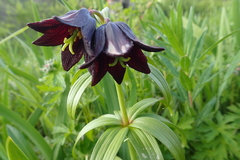 Rice Root
Fritillaria camschatcensis
food
3
-
 Scarlet Fritillary
Fritillaria recurva
food
2
-
 Fragrant Fritillary
Fritillaria liliacea
food
2
-
 Siskiyou Fritillary
Fritillaria glauca
food
2
-
 Gentner's Fritillary
Fritillaria gentneri
food
2
-
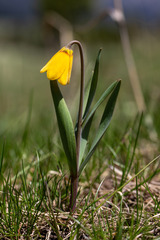 Yellow Fritillary
Fritillaria pudica
food
1
flowers
6
-
 Chocolate Lily
Fritillaria biflora
food
1
flowers
1
-
 Adobe Lily
Fritillaria pluriflora
food
1
flowers
1
-
 Purdy's Fritillary
Fritillaria purdyi
food
1
-
 Ojai Fritillary
Fritillaria ojaiensis
food
1
-
 Stinkbells
Fritillaria agrestis
food
1
-
 San Benito Fritillary
Fritillaria viridea
food
1
-
 Spotted Fritillary
Fritillaria atropurpurea
-
 Brown Fritillary
Fritillaria micrantha