order
Butterflies and Moths
Lepidoptera
Field notes
Lepidoptera ( LEP-ih-DOP-tər-ə) or lepidopterans are an order of winged insects which include butterflies and moths. About 180,000 species of the Lepidoptera have been described, representing 8.6% of the total described species of living organisms, making it the second largest insect order (behind Coleoptera) with 133 families and 43 superfamilies, and one of the most widespread and widely recognizable insect orders in the world.
Lepidopterans have several distinctive features, especially colored scales that cover their bodies, large triangular wings, and a proboscis for drinking nectar. Almost all species have membranous wings. Mating and egg-laying are normally near or on host plants for the larvae. Butterflies and moths undergo complete metamorphosis. The larva is called a caterpillar; it has a cylindrical body with a well-developed head, chewing mouthparts, three pairs of legs and up to five pairs of prolegs. As it grows, it changes in appearance, going through a series of stages called instars. Once mature, it develops into a pupa. A few butterflies and many moth species spin a silk casing or cocoon for protection prior to pupating, while others just go underground. A butterfly pupa, called a chrysalis, has a hard skin, usually with no cocoon. In the pupa, metamorphosis occurs, and a sexually mature adult emerges.
Lepidopterans first appeared in the fossil record at the Triassic-Jurassic boundary. They have coevolved with flowering plants since the angiosperm boom in the Cretaceous. They have evolved a wide range of wing patterns ranging from camouflaged moths to the vivid displays of butterflies. A person who studies this order is called a lepidopterist.
Butterflies and moths are mostly herbivorous as caterpillars and nectar-feeding as adults. They serve as economically useful pollinators; conversely, caterpillars are often pests in agriculture, as they can quickly consume large quantities of leaves. Females often produce up to 600 eggs.
Read more on WikipediaChildren 24 of 40
- Owlet Moths and Allies 2,695 native
- Pyralid and Crambid Snout Moths 941 native
- Geometrid and Swallowtail Moths 934 native
- Tortricid Leafroller Moths and Allies 844 native
- Butterflies 762 native
- Curved-horn Moths 651 native
- Gracillarioidea 226 native
- Hawk, Sphinx, Silk, Emperor, and Allied Moths 184 native
- Bagworms, Clothes Moths, and Allies 124 native
- Clearwing Moths 113 native
- Ermine Moths and Allies 106 native
- Flannel, Slug Caterpillar, Leaf Skeletonizer, and Allied Moths 73 native
- Pygmy Leafminer Moths 72 native
- Fairy Moths and Allies 72 native
- Plume Moths and Allies 64 native
- Carpenter, Leopard, Goat, and Allied Moths 34 native
- Lasiocampoidea 30 native
- Trumpet Leafminer Moths 23 native
- Choreutoidea 20 native
- Hooktip Moths and Allies 17 native
- Fruitworm Moths 14 native
- Ghost Moths and Swift Moths 14 native
- Picture-winged Leaf Moths 7 native
- Eriocranioidea 7 native
Range
Greener is more native, amber more introduced; paler is less certain. How this was decided
Most observed native butterflies and moths All
Native to the US, by observations.
-
 Monarch
Danaus plexippus
533,578 observations
-
 Red Admiral
Vanessa atalanta
291,090 observations
-
 Painted Lady
Vanessa cardui
204,784 observations
-
 Gulf Fritillary
Dione vanillae
185,930 observations
-
 Eastern Tiger Swallowtail
Papilio glaucus
170,876 observations
-
 Black Swallowtail
Papilio polyxenes
143,150 observations
-
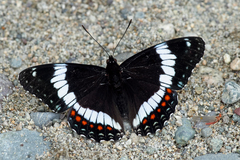 Red-spotted Admiral
Limenitis arthemis
122,487 observations
-
 Fiery Skipper
Hylephila phyleus
114,963 observations
-
 Pearl Crescent
Phyciodes tharos
114,697 observations
-
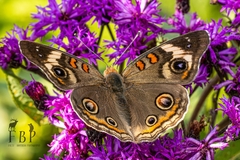 Common Buckeye
Junonia coenia
110,091 observations
-
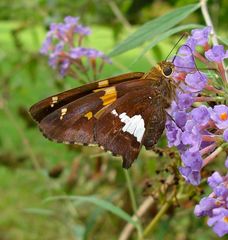 Silver-spotted Skipper
Epargyreus clarus
106,459 observations
-
 Isabella Tiger Moth
Pyrrharctia isabella
102,926 observations
-
 Pipevine Swallowtail
Battus philenor
96,845 observations
-
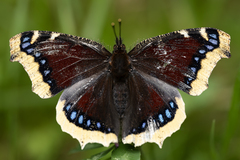 Mourning Cloak
Nymphalis antiopa
96,165 observations
-
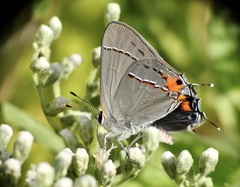 Gray Hairstreak
Strymon melinus
88,629 observations