order
Proboscideans
Proboscidea
Field notes
Proboscidea (; from Latin proboscis, from Ancient Greek προβοσκίς (proboskís) 'elephant's trunk') is a taxonomic order of Afrothere paenungulate mammals described by J. Illiger in 1811. It encompasses the elephants (family Elephantidae) and their extinct relatives. Three living species of elephant are currently recognised: the African bush elephant, the African forest elephant, and the Asian elephant.
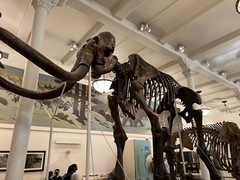
Extinct members of Proboscidea include the deinotheres, mastodons, gomphotheres, amebelodonts and stegodonts. The family Elephantidae also contains several extinct groups, including mammoths and Palaeoloxodon. Proboscideans include some of the largest known land mammals, with the elephant Palaeoloxodon namadicus and mastodon "Mammut" borsoni suggested to have body masses surpassing 16 tonnes (35,000 lb), rivalling or exceeding paraceratheres, the otherwise largest known land mammals in size. The largest living proboscidean is the African bush elephant, with a recorded maximum size of 4 meters (13.1 feet) at the shoulder and a weight of 10.4 tonnes (11.5 short tons). In addition to their enormous size, later proboscideans are distinguished by tusks and long, muscular trunks, which were less developed or absent in early proboscideans.
Read more on WikipediaChildren
Range
Greener is more native, amber more introduced; paler is less certain. How this was decided
Most observed native proboscideans All
Native to the US, by observations.