species 2,440 observations
Great-spurred Violet
Viola selkirkii
Field notes
Viola selkirkii is a species of violet known by the common names Selkirk's violet and great-spur violet. It is native throughout the Northern Hemisphere, its distribution circumboreal.
This species is a rhizomatous perennial herb with hairy, heart-shaped leaves. The flowers are up to 1.5 centimeters wide and are violet in color. They lack the beards that some other violets have. Each flower has a spur up to 7 millimeters long. The fruit is a capsule up to 6 millimeters wide. Flowering occurs between April and July. In some regions this violet may be confused with its relatives, the hookedspur violet (V. adunca) and the common blue violet (V. sororia). Its relatively large spur is a good distinguishing characteristic.
Like some other violets, this species forcefully ejects its mature seeds from the fruit capsules. Ants then pick up the seeds and aid in their dispersal.
The plant occupies many types of moist, shady, cool habitat. In North America it is mostly found in forests. Like many other violets it often grows on rotting wood. It also seems to favor calcareous substrates such as limestone.
While the plant is not rare in general, it is considered to be an imperiled species in some regions, mainly on the periphery of its range, including the US states of Colorado, Connecticut (where it is listed as a special concern species) Montana, Pennsylvania, and South Dakota. In other places it is a common plant.
This plant, which was known at the time only from the vicinity of Montreal, was named by Frederick Traugott Pursh for Thomas Douglas, 5th Earl of Selkirk, who had chosen Pursh to serve as botanist of a proposed expedition to the Red River Colony in what is now Manitoba.
Read more on WikipediaSupports All
supported in the US
-
Caterpillars
Moths and butterflies raised on it


 Beggar Moth, Atlantis Fritillary, Waterlily Leafcutter Moth, Meadow Fritillary
8
-
Specialist bees
Bees whose young are raised on the pollen of it
 Violet Miner
1
-
Hosted animals
Gall makers, leaf miners and other animals living on or in it
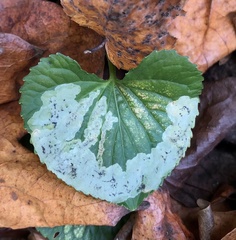

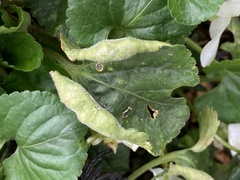 Liriomyza violivora, Violet Leafmining Sawfly, Prodiplosis violicola
3
-
Plant eaters
Animals that feed on it


 Ruffed Grouse, Wild Turkey, Vesper Sparrow, Brown Bear
6
-
Flower visitors
Pollinators and other flower visitors
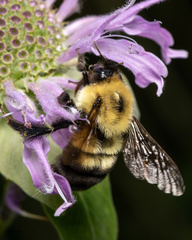


 Two-spotted Bumble Bee, Common Eastern Bumble Bee, Brown-belted Bumble Bee, Greater Bee Fly
51
Range
Greener is more native, amber more introduced; paler is less certain. How this was decided
Key traits
- Layer
- Herbaceous plants
- Plant type
- Perennial Wildflower
From USDA PLANTS.