species 1,464 observations
Burroweed
Isocoma tenuisecta
Field notes
Isocoma tenuisecta, commonly called burroweed, shrine jimmyweed, or burrow goldenweed is a North American species of small, flowering perennial herbs in the family Asteraceae. It is native to Arizona, New Mexico, and Sonora.
Isocoma tenuisecta grows 1 to 3 feet (30–90 cm) tall. Leaves are narrowly lance-shaped, with numerous large teeth or small lobes along the edges. The leaves are glandular and lobed. The plant flowers in September through November, with clusters of heads at the ends of branches and on top of the main stem. Each head contains 8-15 yellow disc flowers but no ray flowers. The old heads turn dry and tan and remain on the plant after the achenes have dispersed.
Burroweed is poisonous to mammals, including cattle, which can transfer the poison to humans through milk.
Read more on WikipediaSupports All
supported in the US
-
Specialist bees
Bees whose young are raised on the pollen of it


 Dark-faced Longhorn Bee, Sabine Longhorn Bee, Melissodes verbesinarum
3
-
Plant eaters
Animals that feed on it
 Redcoat Seed Bug
1
-
Flower visitors
Pollinators and other flower visitors
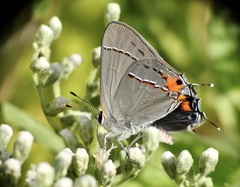


 Gray Hairstreak, Ceraunus Blue, Notocyphus dorsalis, Peridot Sweat Bee
4
Range
Greener is more native, amber more introduced; paler is less certain. How this was decided
Key traits
- Layer
- Herbaceous plants
- Plant type
- Perennial Wildflower
From USDA PLANTS.