species 16,906 observations
Scrambling Dayflower
Commelina diffusa
Field notes
Commelina diffusa, sometimes known as the climbing dayflower or spreading dayflower, is an herbaceous plant in the dayflower family. Its native distribution is Paleotropical, including tropical and southern Africa, Yemen, the Indian Subcontinent, Indochina, Peninsular Malaysia, southern China, Japan, Korea, the Philippines, New Guinea, and the Pacific Islands. It has been introduced throughout the tropical and subtropical Americas, where it is now found from the eastern and midwestern United States to northern Argentina. It has been introduced to the southeastern United States where it is most common in wet disturbed soils. There are two recognised varieties, one being the type and the other being C. diffusa var. gigas, which is native to Asia and has been introduced to Florida. It flowers from spring to fall and is most common in disturbed situations, moist places and forests. In China the plant is used medicinally as a febrifuge and a diuretic. A blue dye is also extracted from the flower for paints. In the Hawaiian Islands, it is known as "honohono grass", although it is technically not a grass. "Honohono" refers to the alternating structure of the leaves. At least one publication lists it as an edible plant in New Guinea.
Read more on WikipediaSupports All
supported in the US
-
Caterpillars
Moths and butterflies raised on it
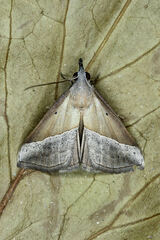
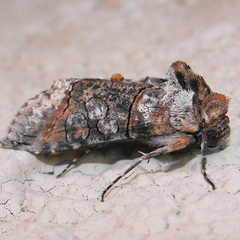 Brown Triangle Snout, Mouralia tinctoides
2
-
Plant eaters
Animals that feed on it


 Six-spotted Neolema, Eastern Chipmunk, Common Ground Dove, Mourning Dove
5
-
Flower visitors
Pollinators and other flower visitors
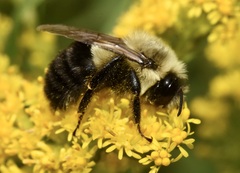


 Common Eastern Bumble Bee, Two-spotted Longhorn Bee, Margined Calligrapher, Fifteen-spotted Lady Beetle
8
Children
Range
Greener is more native, amber more introduced; paler is less certain. How this was decided
Key traits
- Layer
- Herbaceous plants
- Plant type
- Annual Perennial Wildflower
From USDA PLANTS.