species 7,518 observations
Texas Madrone
Arbutus xalapensis
Field notes
Arbutus xalapensis, commonly known as the Texas madrone, Amazaquitl, or Texas madroño, is a species of flowering plant in the heather family. It is native to Central America, the southwestern United States (western Texas and New Mexico), and throughout Mexico. It is found in canyons and mountains, on rocky plains, and in oak woodlands, at altitudes of up to 3,000 m (9,800 ft) in the south of the range, but lower, down to 600 m (2,000 ft) in the north of the range.
Arbutus xalapensis is a large shrub or small to medium-sized evergreen tree growing to 5–25 meters (16–82 ft) tall with a trunk up to 50 cm (20 in) in diameter, with smooth orange-brown bark peeling in thin sheets. The size varies regionally with available rainfall, with small, shrubby plants in dry areas such as western Texas and New Mexico, and larger trees in moister areas of Mexico; plants in Texas, New Mexico, and the far northeast of Mexico are distinguished as a variety, A. xalapensis var. texana, or even a distinct species A. texana, by some botanists, but others do not regard these as distinct.
The leaves are oblong to lanceolate, 5–17 cm (2.0–6.7 in) long and 1.5–5 cm (0.59–1.97 in) broad, with an entire or serrated margin. The flowers are bell-shaped, white or pale pink, 5–10 mm long, produced in loose panicles. The fruit is a rough-surfaced red berry 1 cm (0.39 in) in diameter, reportedly edible (however, those of related species have narcotic properties), and contains numerous small seeds.
Read more on WikipediaSupports All
supported in the US
-
Caterpillars
Moths and butterflies raised on it
 Brown Elfin
1
-
Plant eaters
Animals that feed on it


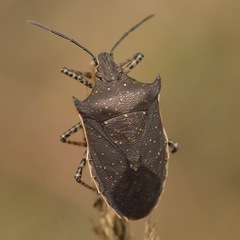 Southern Piñon Sun-Singer, Ruby-crowned Kinglet, Mexican Cactus Fly, Padaeus trivittatus
5
-
Flower visitors
Pollinators and other flower visitors


 Echo Azure, Arizona Sister, Monarch, Anna's Hummingbird
10
Range
Greener is more native, amber more introduced; paler is less certain. How this was decided
Key traits
From the Lady Bird Johnson Wildflower Center and USDA PLANTS.