species 3,291 observations
Showy Goldenrod
Solidago speciosa
Field notes
Solidago speciosa, the showy goldenrod, is a North American species of flowering plants in the family Asteraceae. It grows in the province of Ontario in central Canada, as well as in the eastern and central United States (from the Atlantic coast west as far as the Great Plains, so from Maine to Georgia (except Delaware) west as far as Texas, Nebraska, and the Dakotas).
Solidago speciosa is a perennial herb up to 200 cm (80 inches, over 6 feet) tall, producing a thick underground caudex. One plant can produce as many as 5 stems, each with up to 300 small yellow flower heads.
Varieties
Solidago speciosa var. rigidiuscula Torr. & A.Gray - mostly in western portions of range
Solidago speciosa var. speciosa - mostly in eastern portions of range
Read more on WikipediaSupports All
supported in the US
-
Caterpillars
Moths and butterflies raised on it


 Ailanthus Webworm Moth, Brown-hooded Owlet, Wavy-lined Emerald, Pink-barred Pseudeustrotia Moth
99
-
Specialist bees
Bees whose young are raised on the pollen of it


 Carpenter-mimic Leafcutter Bee, Dark-veined Longhorn Bee, Drury's Long-horned Bee, Hairy-banded Mining Bee
32
-
Hosted animals
Gall makers, leaf miners and other animals living on or in it


 Goldenrod Gall Fly, Carbonifera Goldenrod Gall Midge, Goldenrod Bunch Gall Midge, Goldenrod Brussels Sprout Gall Fly
21
-
Plant eaters
Animals that feed on it


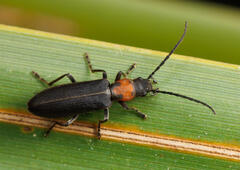 Metric Paper Wasp, Western Encephalitis Mosquito, Geranomyia diversa, Oxycopis notoxoides
49
-
Flower visitors
Pollinators and other flower visitors


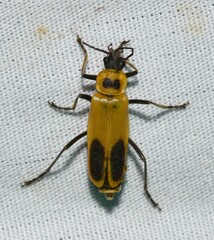 Common Eastern Bumble Bee, Eastern Carpenter Bee, Northern Paper Wasp, Goldenrod Soldier Beetle
524
-
Sheltered animals
Animals that nest or roost in it
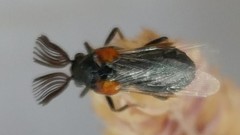


 Ripiphorus californicus, Eurytoma gigantea, Eurytoma obtusiventris, Galeopsomyia haemon
4
Range
Greener is more native, amber more introduced; paler is less certain. How this was decided
Key traits
- Layer
- Herbaceous plants
- Moisture
- Well drained Moist
- Drought tolerant
- Yes
- Deer resistant
- Yes
- Resists
- Diseases
- Plant type
- Wildflower Herbaceous perennial
From NC State Extension, USDA PLANTS and the Lady Bird Johnson Wildflower Center.