species 11,130 observations
Giant Hogweed
Heracleum mantegazzianum
Field notes
Heracleum mantegazzianum, commonly known as giant hogweed, is a monocarpic perennial herbaceous plant in the carrot family Apiaceae. H. mantegazzianum is also known as cartwheel-flower, giant cow parsley, giant cow parsnip, or hogsbane. In New Zealand, it is also sometimes called wild parsnip (not to be confused with Pastinaca sativa) or wild rhubarb.
Giant hogweed is native to the western Caucasus region of Eurasia. Introduced to Britain as an ornamental plant in the 19th century, it has also spread to other areas of Western Europe, as well as the United States, and Canada. Its close relatives, Sosnowsky's hogweed and Persian hogweed, have similarly spread to other parts of Europe.
The sap of giant hogweed is phototoxic and causes phytophotodermatitis in humans, resulting in blisters and scarring. These reactions are caused by furanocoumarin derivatives found in the leaves, roots, stems, flowers, and seeds of the plant. Consequently, many regions consider it a noxious weed.
Read more on WikipediaSupports All
supported in the US
-
Caterpillars
Moths and butterflies raised on it
 Clemens' Agonopterix
1
-
Plant eaters
Animals that feed on it
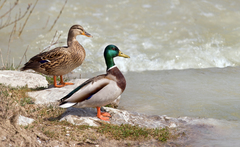


 Mallard, Common Raven, Eurasian Jackdaw, Redpoll
6
-
Flower visitors
Pollinators and other flower visitors


 Common Eastern Bumble Bee, Golden Dung Fly, Illustrious Greenbottle Fly, Sarcophaga subvicina
7
Range
Greener is more native, amber more introduced; paler is less certain. How this was decided
Key traits
- Layer
- Herbaceous plants
- Light
- Part shade
- Moisture
- Well drained Moist
- Habit
- Erect
- Plant type
- Perennial Herbaceous perennial Poisonous Weed
From NC State Extension and USDA PLANTS.