species 8,548 observations
Florida Strangler Fig
Ficus aurea
Field notes
Ficus aurea, commonly known as the Florida strangler fig (or simply strangler fig), golden fig, or higuerón, is a tree in the family Moraceae that is native to the U.S. state of Florida, the northern and western Caribbean, southern Mexico and Central America south to Panama. The specific epithet aurea was applied by English botanist Thomas Nuttall who described the species in 1846.
Ficus aurea is a strangler fig. In figs of this group, seed germination usually takes place in the canopy of a host tree with the seedling living as an epiphyte until its roots establish contact with the ground. After that, it enlarges and strangles its host, eventually becoming a free-standing tree in its own right. Individuals may reach 30 m (100 ft) in height. The tree provides habitat, food and shelter for a host of tropical lifeforms including epiphytes in cloud forests and birds, mammals, reptiles and invertebrates. F. aurea is used in traditional medicine, for live fencing, as an ornamental and as a bonsai.
Read more on WikipediaSupports All
supported in the US
-
Caterpillars
Moths and butterflies raised on it


 Ruddy Daggerwing, Edwards' Wasp Moth, Slosson's Metalmark Moth, Lesser Mulberry Snout
9
-
Hosted animals
Gall makers, leaf miners and other animals living on or in it
 Pegoscapus mexicana
1
-
Plant eaters
Animals that feed on it


 Black-throated Blue Warbler, Cape May Warbler, Yellow-rumped Warbler, Baltimore Oriole
40
-
Flower visitors
Pollinators and other flower visitors
 Iridescent Tortoise Beetle
1
-
Sheltered animals
Animals that nest or roost in it
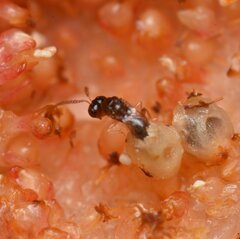 Anidarnes bicolor
1
Range
Greener is more native, amber more introduced; paler is less certain. How this was decided
Key traits
- Layer
- Trees
From USDA PLANTS.