genus
Amanita Mushrooms
Amanita
Field notes
The genus Amanita contains about 600 described species of agarics, including some of the most toxic known mushrooms found worldwide, as well as some well-regarded edible species (and many species of unknown edibility). The genus is responsible for 95% of fatalities resulting from mushroom poisoning, with the death cap accounting for 90% of fatalities every year. The most potent toxin synthesized by this genus is α-Amanitin.
The genus also contains many edible mushrooms, but mycologists advice caution in selecting any of these for human consumption, due to the potentially lethal consequences of misidentification. Nonetheless, in some cultures, the larger local edible species of Amanita are mainstays of the markets in the local growing season. Samples of this are Amanita zambiana and other fleshy species in central Africa, A. basii and similar species in Mexico, A. caesarea and the "Blusher" A. rubescens in Europe, and A. chepangiana in Southeast Asia. Other species are used for colouring sauces, such as the red A. jacksonii, with a range from eastern Canada to eastern Mexico.
North American members of this genus have been recorded as main food of the pleasing fungus beetle Tritoma biguttata. Unspecified Amanita were also found associated with the related T. atriventris, but it does not seem to be a regular food source for that beetle species.
Read more on WikipediaChildren
- Amanita Subg. Amanita 5 native
- Amanita Subg. Amanitina 1 native
- Argentine Stinking Lepidella
- Amanita Sect. Lepidella
- Amanita Sect. Lepidella
- Amanita Sect. Lepidella
- Amanita Sect. Lepidella
- Amanita Sect. Lepidella
- Amanita olivaceobrunnea
- Amanita Sect. Lepidella
- Amanita Sect. Lepidella
- Amanita Sect. Lepidella
- Amanita Sect. Lepidella
- Lepidella
Range
Greener is more native, amber more introduced; paler is less certain. How this was decided
Most observed native amanita mushrooms All
Native to the US, by observations.
-
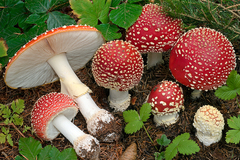 Fly Agaric
Amanita muscaria
158,362 observations
-
 Eastern North American Destroying Angel
Amanita bisporigera
18,414 observations
-
 Jackson's Slender Caesar
Amanita jacksonii
10,937 observations
-
 Peach-Colored Fly Agaric
Amanita persicina
6,493 observations
-
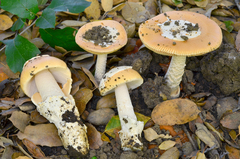 Springtime Amanita
Amanita velosa
5,594 observations
-
Candlestick Amanita Amanita calyptratoides 529 observations
-
 American Amidella
Amanita volvata
151 observations
-
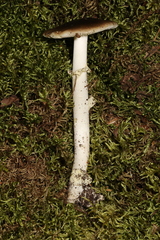 Amanita lignophila
27 observations